Growing up with his father, Akira, Yusaku Shibata was embraced with motor sport from the moment he arrived in this world. His life would see him behind the wheel of numerous race cars throughout a number of series, and eventually coming full circle to own and operate the tuning shop his father founded in 1985; ARVOU Motor Sports Service.
Akira-san started the original ARVOU in Utsunomiya City; a small garage where he slowly built up a list of clients who saw his performance on track, and grew to trust in his work. Several years later, after having outgrown the garage, the operation was moved to it’s current location in Nikko City. Yusaku was only 11 years old when his father opened ARVOU, and recalls vividly his first days experiencing the race track with his father, attending Akira’s races until he was old enough to join in a youth karting series. For Yusaku, there was never really a doubt that he was on the right path, being around motor sports just felt natural to him. His father instilled in him a passion that would fuel a life long endeavor in racing. From his first laps in a kart, Yusaku would go on to compete in the All Japan Championship for four years, from the age of 16 to 19, taking a handful of podium positions in his early progression as a driver.
The relationship he shared with his father, however, was one that was cut far too short. In early April of 1994, at the F3000 (currently known as Super Formula) support race in Fuji Speedway, Akira came into contact with another car during the start of the race that sent him into the concrete wall of the main straight. Akira’s passing was a truly tragic event, and one we hope we never have to live through ourselves. In our focus of the competitiveness and excitement of automotive racing, we often times forget the very present dangers that exist in the sport. Especially in the earlier years, where safety standards weren’t at the levels that exist today, the hazards were precarious at best. This particular event was one that would shape Yusaku’s future from that point on.

Having to take over the family business at such a young age (Yusaku was 20 at the time), gave him the chance to double down in motor sports, carrying his father’s legacy with him. After adjusting to his new position of managing ARVOU, a few years later he began to take an interest in driving again, and set his sights on the sport of Gymkhana, a form of racing that was once again growing in popularity. It is possible that he chose this form of motor sport to begin racing again due to it’s lower risk, something more akin to time attack without wheel to wheel racing. Over the next years he had an immense focus on Gymkhana, enjoying the narrow tuning ranges involved with the tight circuits. Gymkhana has a fairly extensive history in Japan as a way to cement the fundamentals of car control in all drivers, from beginners to professionals. From the JAF website directly:
“…The Gymkhana course includes areas that require certain driving skills to clear, such as slalom, S-shaped corners, and 360-degree turns. In order to capture these, it is essential to be able to operate the car like limbs by extremely controlling the accelerator, brakes, and steering. In addition to the technique, the intellectual area of how to clear the compound section is also the key to the game. The more experience you have, the wider your strategy will be. It is also the core of the Gymkhana competition to cultivate a strong mental power that can accurately bring out the skills acquired. Therefore, it is widely loved not only as an introductory category for easy and safe motor sports, but also as a category that attracts veterans who have accumulated all kinds of experience…”
Having never really been interested in the touge (despite what you’ve seen on Hot Version), and coming from a background in karting, may have given Yusaku an edge in the sport as he had no bad habits to develop out of. Throughout his career in Gymkhana he would campaign several cars from a Mazda FD3S, S2000s, as well as a Lotus Exige; some of the very cars ARVOU focuses on to this day, noting the S2000’s high combat power from the factory. Every car that he competed in was built by himself, which is arguably the best way to learn what works and what doesn’t. It was a facet of his program that not many other drivers in the series could mimic. He was so successful in driving this style, that by 2014 Yusaku had racked up an incredible 6 consecutive championship titles in the All Japan Gymkhana Series starting from 2009. It was no doubt a period of growth, both in skill and mental fortitude, that awarded him his Super GT debut in 2015. And while he didn’t have any particular success in tuning the S2000 for Gymkhana due to class regulations, he saw early on the car’s potential in racing.
Yusaku’s modern career has seen him dip in and out of Super GT, Super Taikyu, as well as the Attack series, driving under his own representation. He is currently driving in the GT300 class in the RUNUP Rivaux GTR, as well as the MP Racing GTR in Super Taikyu. On top of his personal race career, he and the shop also support many high profile race clients with the wealth of knowledge he has acquired over the nearly 4 decades of building and tuning cars. Yusaku’s tuning style is one we here at NDF can sympathize with:
「私たちが作る車は、走っていてもいなくても、かっこいい雰囲気でなければなりません。」
“The cars we build must have a cool atmosphere, whether they are running or not.”
The ride height of the car, the aero parts, they all must come together to create a cohesive look that is both aesthetically pleasing and functional; but the bottom line is that it needs to look good (and there is no arguing that ARVOU is successful in this venture). Yusaku himself handles the suspension and engine tuning, as well as ECU settings on their dyno. He is currently assembling about one F20C/F22C series engine per month, as the overwhelming majority of customers at ARVOU are S2000’s. Yusaku enjoys the F series engine so much, he would be content working on them for the rest of his life.


Around the backside, a handful of customer cars were waiting their turn to be fixed, maintained and upgraded by the skillful hands of Shibata-san. Old signage lines the grounds from years past, and as times modernize, it’s pretty cool to see how the logo changes as the years pass.


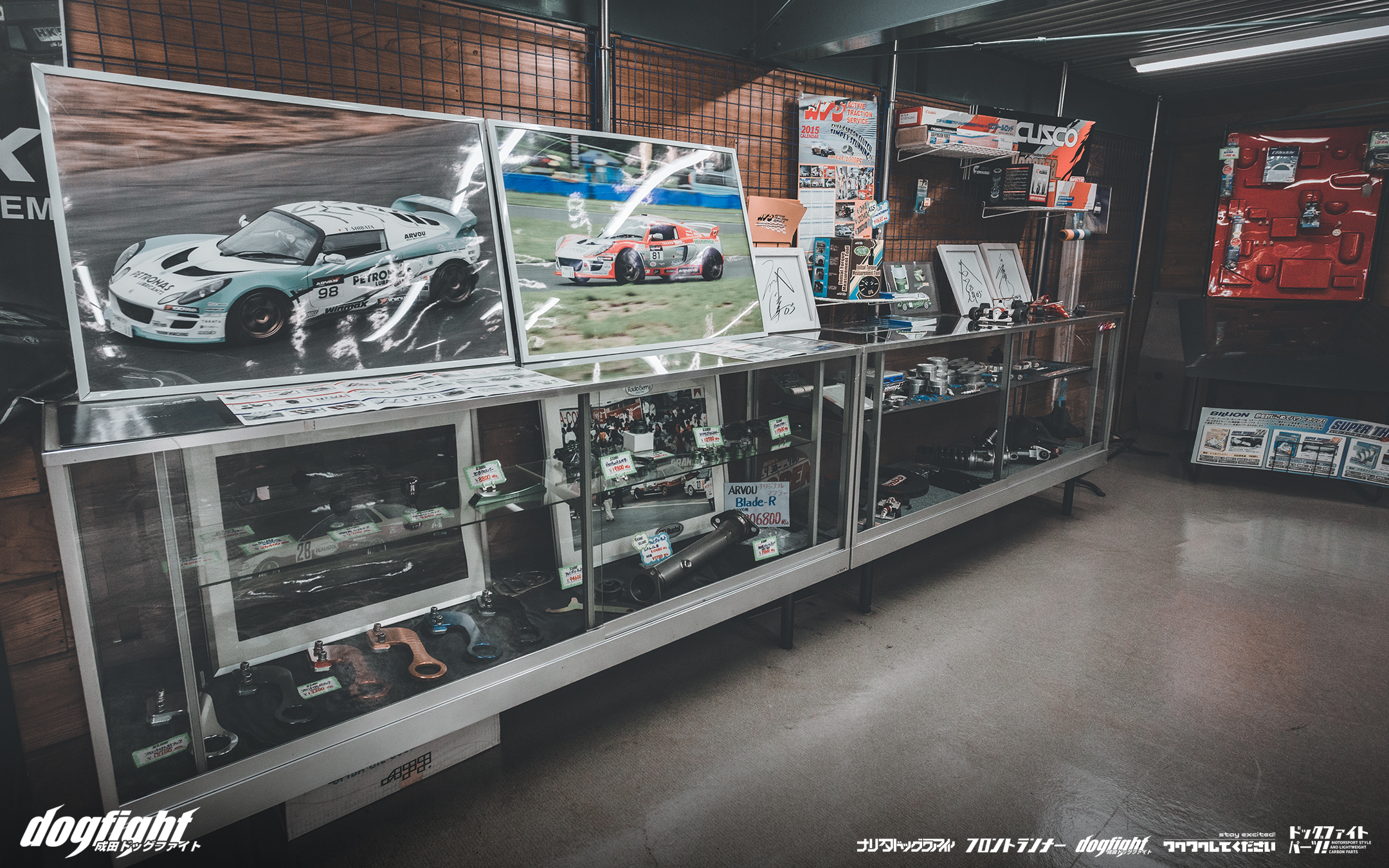
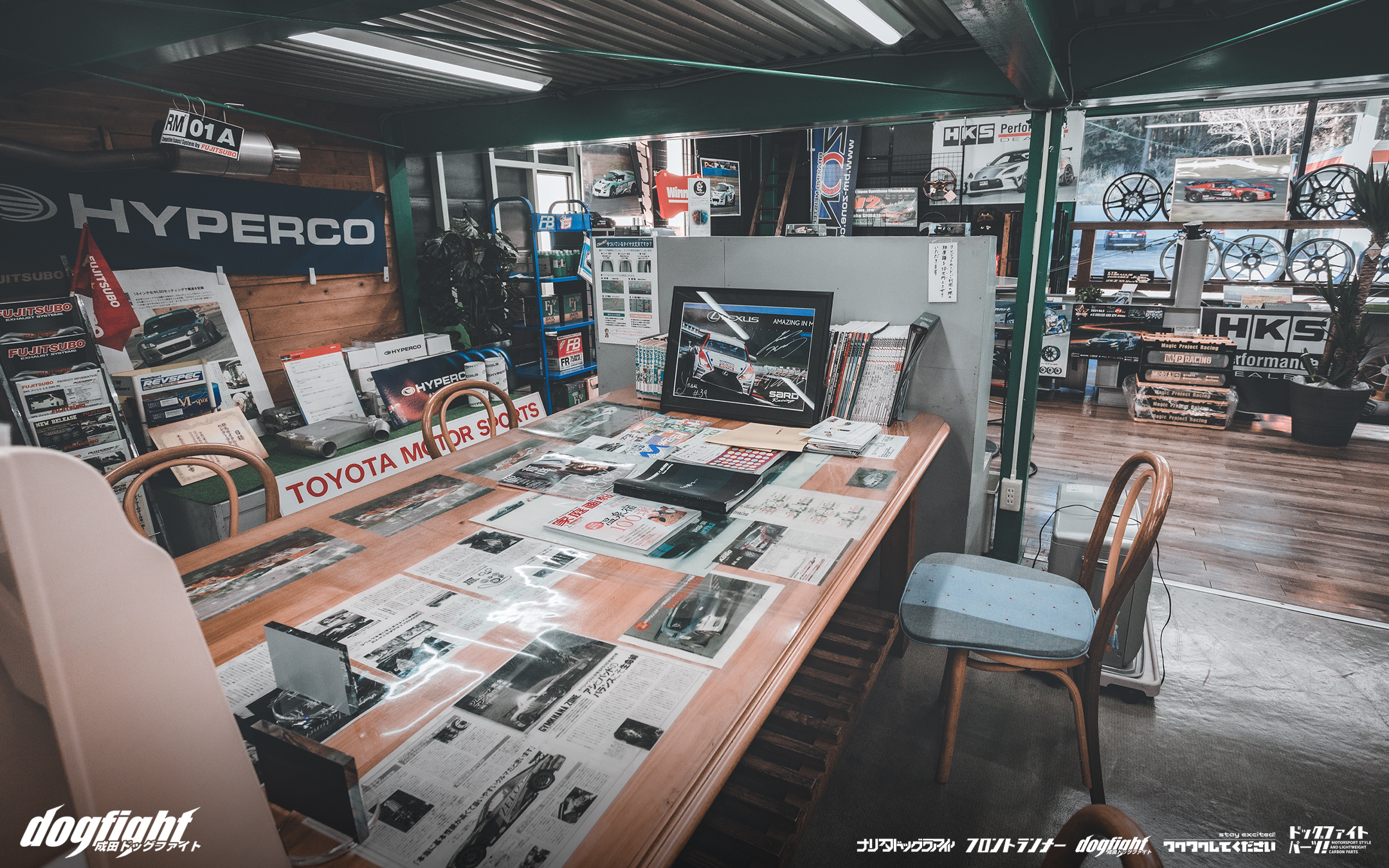

A quick look around the shop floor shows many projects in progress, scattered inventory and engine components mid-build, walls full of manifolds, driveshafts and exhaust parts, and a plethora of tools and special equipment. It is a rather large shop, as far as tuning shops in Japan go, and Yusaku makes good use of the space.


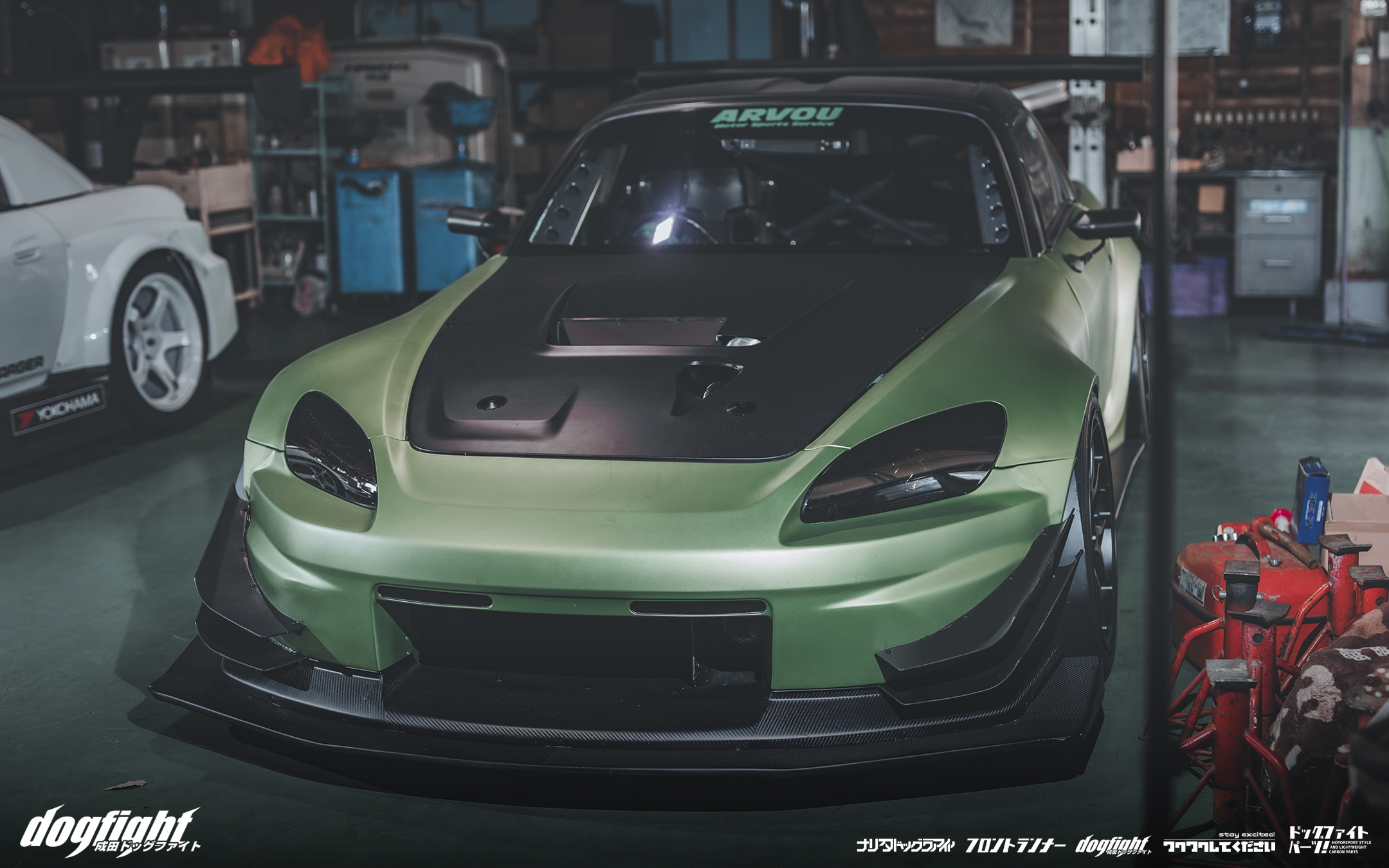
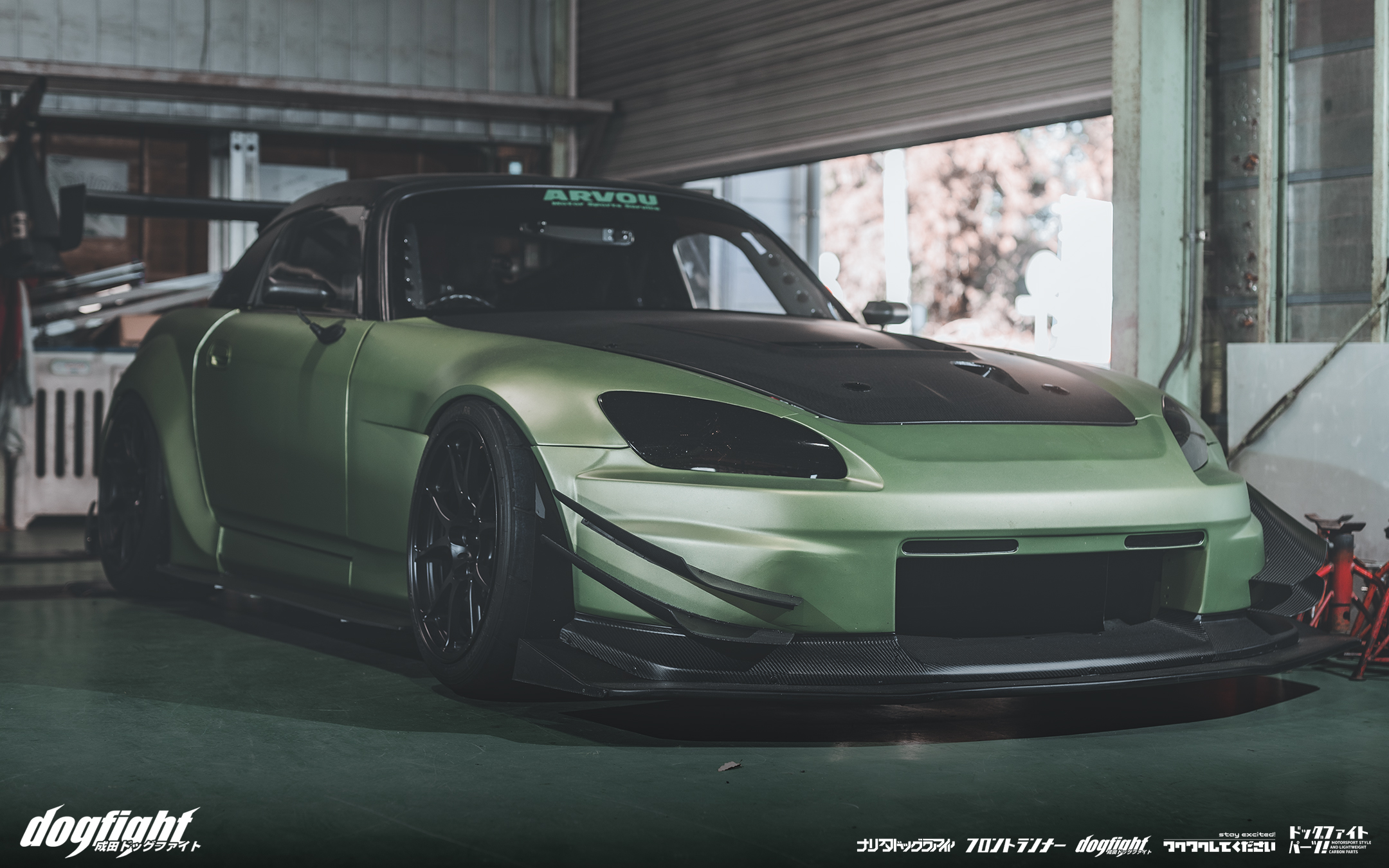
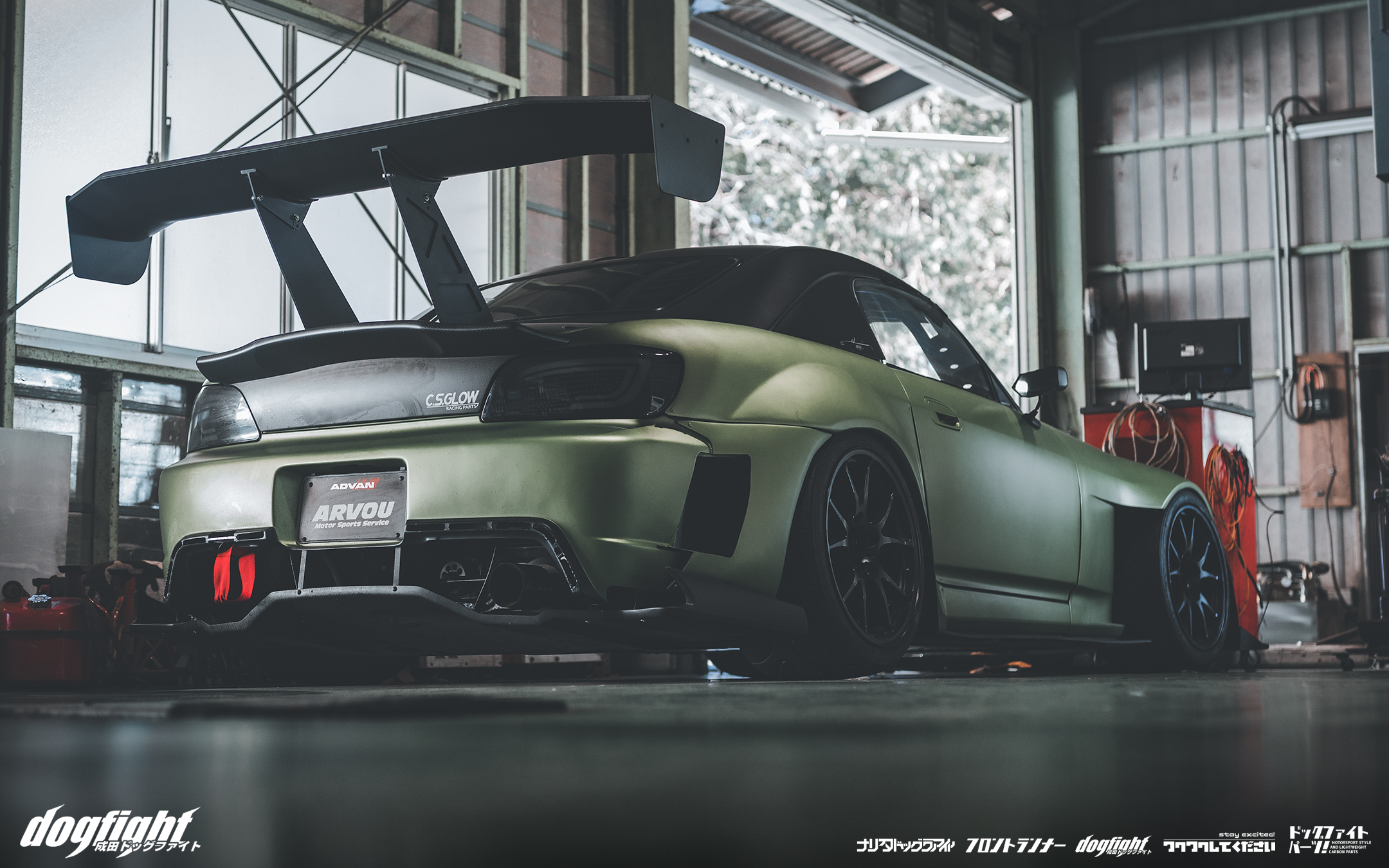
The car’s that ARVOU are most notably known for are, naturally, their S2000’s – both their demo cars, and that of loyal customer Yoshitaka Iishi and his ‘Kimidori’ S2000 (which for the most part has a residency at ARVOU). Yoshitaka currently holds the record of fastest NA S2000 at Tsukuba Circuit with a 56.855.
Yusaku and his team have built two demo cars under the flag of ARVOU; the first is the ‘Maou’ S2000. This is the one most people are familiar with as the demo car that Orido-san crashed in the Hot Version Touge Battle. In typical Orido fashion, he threw it under a guardrail, and the car was scrapped.
The second is the current Voltex equipped S2000. This car was built for the 2021 season of Attack using the engine and supercharger from the crashed Maou S2000. This motor, previous to being used in 2021, was used for a total of 8 seasons of time attack without a single overhaul. If you ever had any doubt of Yusaku’s engine building capability, let it rest with that last statement.
This is the same engine that produced the 53 second lap time at TC2000. After scrapping the Moau S2000 project after the crash, Yusaku initially began the second build with the goal of hitting the 54 second range at Tsukuba. However, that goal was quickly modified when, on the shakedown lap, he clocked a 55 second flat lap time. Thoroughly surprised at what the machine he built was capable of, he went back to the drawing board. Some small adjustments, and more seat time eventually got him the 53.887 which stands as his fastest time around the track.
In the 2022 season, he set a new expectation of an improvement of about 0.5 seconds. Given last season’s result and the lack of development on the car, he felt that he was not yet at the limit. Having achieved last seasons time with about 450hp, to achieve the low 53 he was looking for, he decided that he needed to increase the power output of the engine. Unfortunately, as a result of aggressively pushing the limits on ignition timing and boost, Yusaku blew the engine while tuning on the Dynapack. The engine that lasted almost 9 seasons of Attack finally gave in under the stress of demand. So for this past season, he gathered up enough F series parts to piece together a practice motor, and ran under the low specification, while he builds a new motor on the side for 2023. There is no doubt whatsoever that the new spec’d engine is going to be an evolution of the previous, and I wouldn’t be surprised to see him soon challenging the Top Fuel S2000 time of 51.762, set back in 2016. That would be simply incredible and a testament to his almost unmatched tuning ability.
Please enjoy the gallery of the ARVOU demo car.


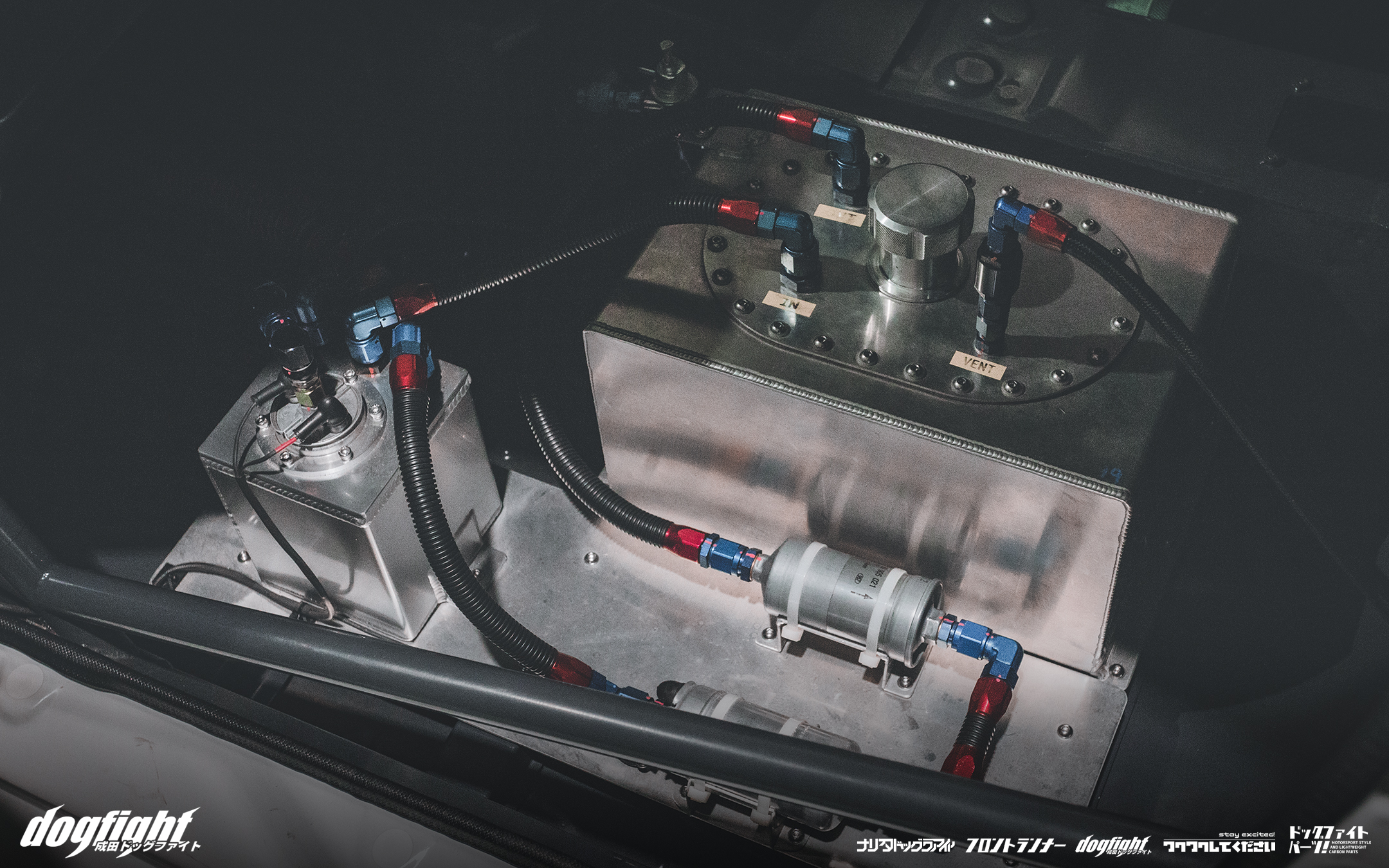


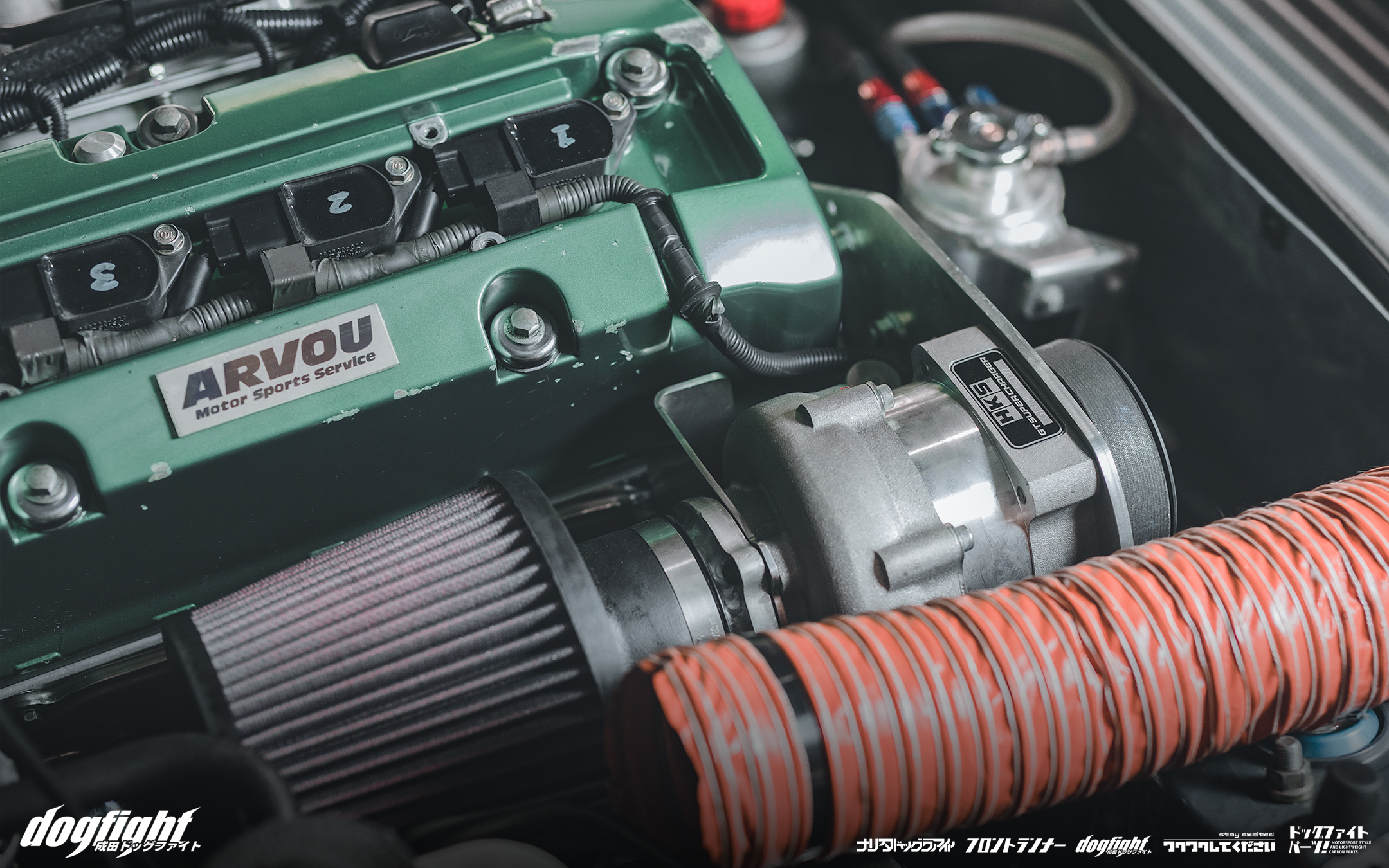


Yoshitaka-san has several upgrades for his build for next season. The overall weight of the vehicle has been reduced to 1000kg with the help of added carbon parts replacing some of the heavier OE components that still remained. We also see an all new dash setup, and small aero and cooling upgrades. The engine output is also the highest ever. The newly completed 2.4 liter F22C produces a healthy and reliable 350hp. Unable to set a competitive time this season (shakedown on used tires), Yoshitaka will be saving the machine for next season. We’ll definitely be keeping an eye on him to see how much he can improve on his record. Please enjoy the gallery of the ‘Kimidori’ S2000.