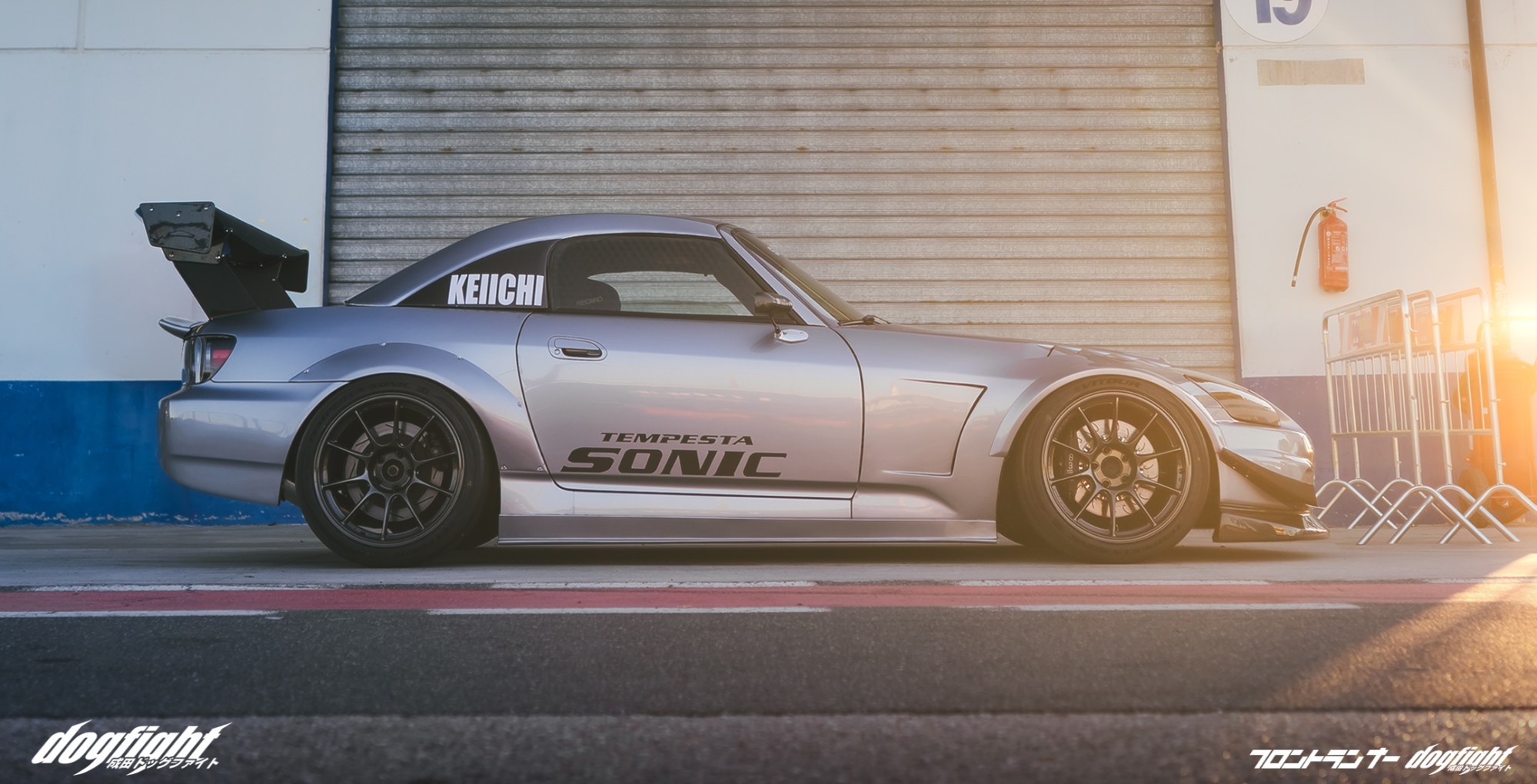
I first met Alessio at Battle Evome in 2014. We crossed paths a few more times in Japan after that, usually only briefly, but about one or two years ago, we started talking much more regularly. Somewhere along the way it became pretty obvious that we tend to see cars, and time attack in general, in a very similar way. There are plenty of people involved in time attack who appreciate Japanese tuning, but Alessio’s interest goes much further than simply liking Japanese cars or parts. He has spent years trying to understand why Japanese time attack developed the way it did, and more importantly, what separates it from the versions of the sport that grew outside of Japan. We both agree that style is the leading factor, and the one often found missing in other countries.
We both have a difficult time separating the visual side of a car from its performance. Actually, it’s virtually impossible for us. These next few sentences may hurt some feelings, but it’s no secret – I’ve mentioned it many times in the past. A fast car can still be badly built. It can still have poor proportions, mismatched parts, DIY aero, high ride height, or simply no coherent direction (catalog car). A fast lap time does not automatically make those decisions disappear, nor does it excuse them. The long standing claim ‘function over form’ is such an outdated cop out. For one reason or another, Japan shares this mindset with us, and places style equal to the cars performance.
Ale once put it another way to me while we were talking about Tsukuba. Hundreds of private entrants, shops, manufacturers and tuners spent decades moving in roughly the same direction here (Japan), gradually creating what we now recognize as Japanese time attack. It was never the result of somebody writing a rulebook explaining what a time attack car was supposed to look like. Most of ‘Attack’ is unstructured save for drive train and power adder, and somewhat reliant on gentlemen’s agreements (i.e slick times being exhibition only).
When someone like myself, or Ale for that reason, talks about Tsukuba, it is rarely just about the lap times. We see the circuit as the benchmark because of the culture that developed around it. The cars, the shops, the drivers and the events all influenced one another until a recognizable style of building cars emerged alongside the pursuit of outright lap times. Alessio and I were certainly cut from the same cloth.
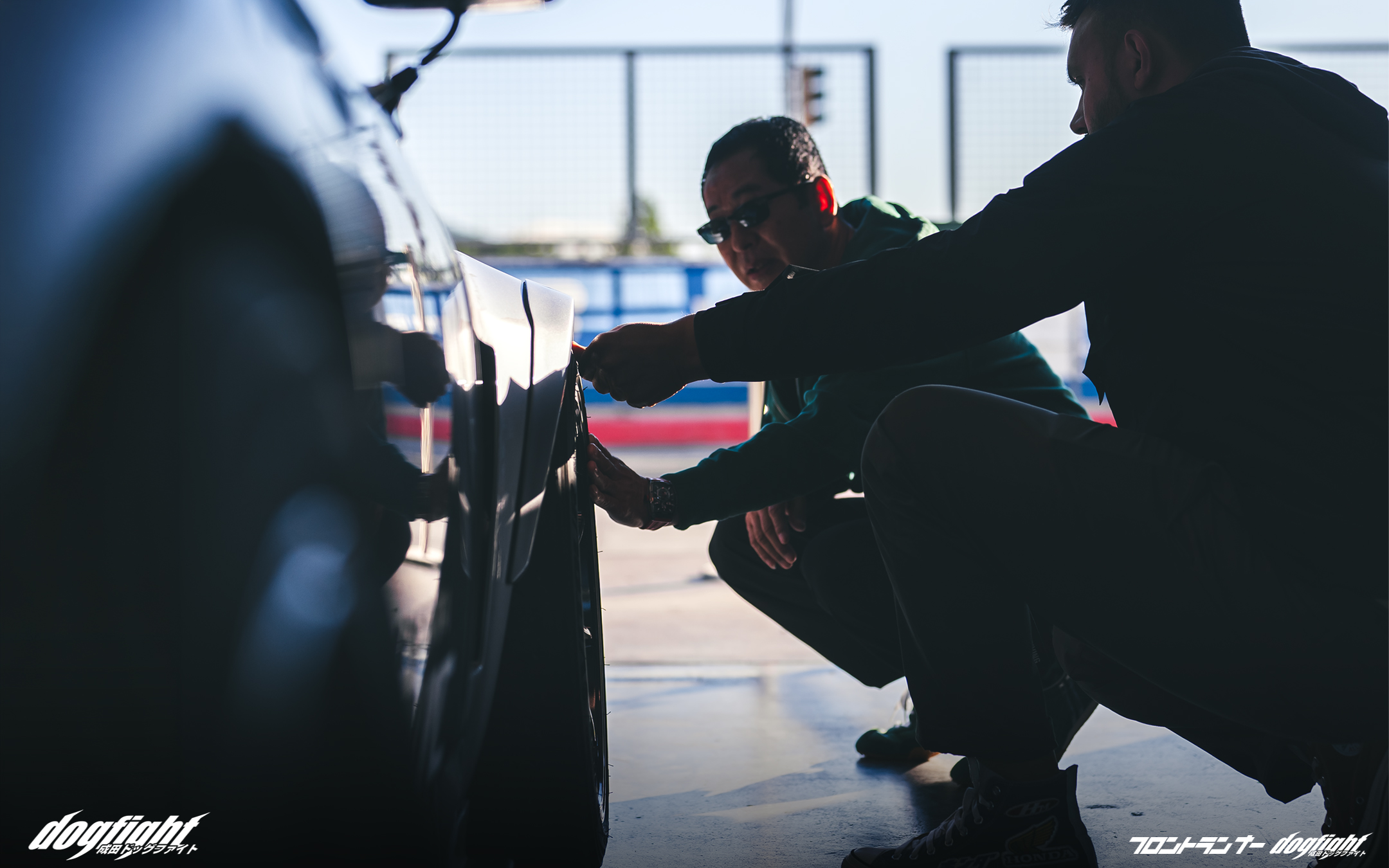
In his words, much like myself, Japanese time attack is almost half of his life. To date he has traveled to Tsukuba a total of 6 times, attending Battle Evome, Zummy events, and Attack – years spent watching the cars develop, all to eventually build his own event in Italy around the same philosophy. After taking the time to know him, the connection is not really difficult to understand.

That event is Magione Super Battle.
Held at Autodromo dell’Umbria in Magione, the event sits under the now larger Italian Super Battle organization. Headed by Alessio (Cavaletti) himself, and his close friends Alessio (Papini), and Edoardo ‘Edo’ Curioni (among many others) – the project growing larger than any of them had ever imagined.
MSB began in 2022, largely because Alessio felt there was nothing in Europe that represented the type of event he wanted to participate in himself. The original idea was probably closer to Attack than what exists today. No unnecessary media spectacle, limited outside influence and a strong focus on the cars and drivers themselves.
However, over time, Alessio realized that directly copying the Japanese format was impossible. Japan has decades of established circuit etiquette and an existing culture around time attack. Trying to impose the same expectations on a completely different group of drivers in Europe simply did not work. More structured rules became necessary, awards became necessary for each class, incentives to compete, and the way the event communicated with entrants had to change.
Rather than continuing to force a Japanese format onto an Italian event, MSB began developing its own identity, all the while respecting the underlying essence of the events in Japan. That is probably the part of Alessio’s approach that I respect the most. There are elements of Attack that can be studied and carried over, but copying the surface level details does not recreate the culture underneath them. I ran into the same issue years ago with our own event ‘NDF Attack Challenge’. A class structure can look perfectly reasonable on paper, but once the level of the cars varies enough, the divisions quickly stop meaning what you intended them to mean. Time attack works because of the people participating in it as much as it does because of the regulations. The Western philosophy toward tuning is still markedly different from Japan’s.
Despite the changes though, the Japanese connection to MSB has still become increasingly tangible. Last year Alessio brought Keiichi Tsuchiya to the event, and this year he returned with Orido and Tarzan Yamada alongside him. Having people who helped shape the era and style of Japanese time attack present at Magione gave the event another layer of credibility, but more importantly, it brought Alessio’s own influences directly into the environment he had been trying to build in Italy.
For Alessio, MSB has become the practical version of everything he has learned through those experiences, and it is also completely intertwined with his S2000.

The car follows the same basic thinking. Japanese influence is obvious, but it has never been about assembling a catalogue of Japanese parts. Alessio has taken pieces from several different cars and eras that he likes, then worked them into something that still reads clearly as his own.
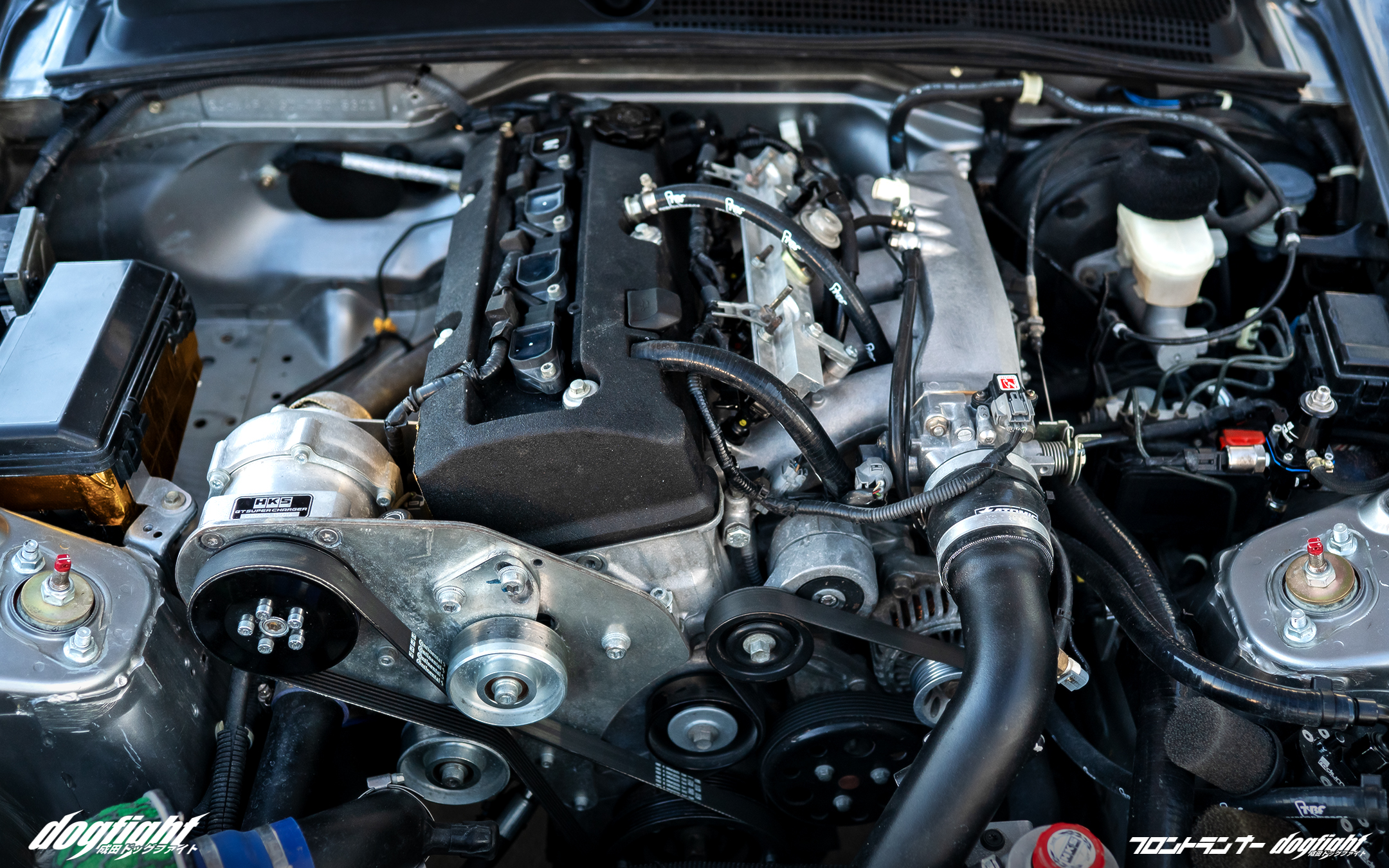
The car itself started from a completely stock 2004 AP1, purchased by Alessio in 2013. From there the build developed gradually into something much more focused, but still without losing the balance that originally made the S2000 appealing to him. The F20C remains at the center of the car, now assisted by an HKS GT1 supercharger and tuned for roughly 350 horsepower on flex fuel with ethanol. Supporting the setup is a Walbro 255 fuel pump, 1000 cc injectors, a Skunk2 MAP sensor and an AEM V2 ECU combined with AEM AFR and flex-fuel control. The cylinder head has also been reworked with Ferrea valves, upgraded plates and an adjustable Ballade Sports timing gear. Ale has mentioned next year he would like to change the ECU to a Link unit to modernize the build and allow better tuning/diagnosing.
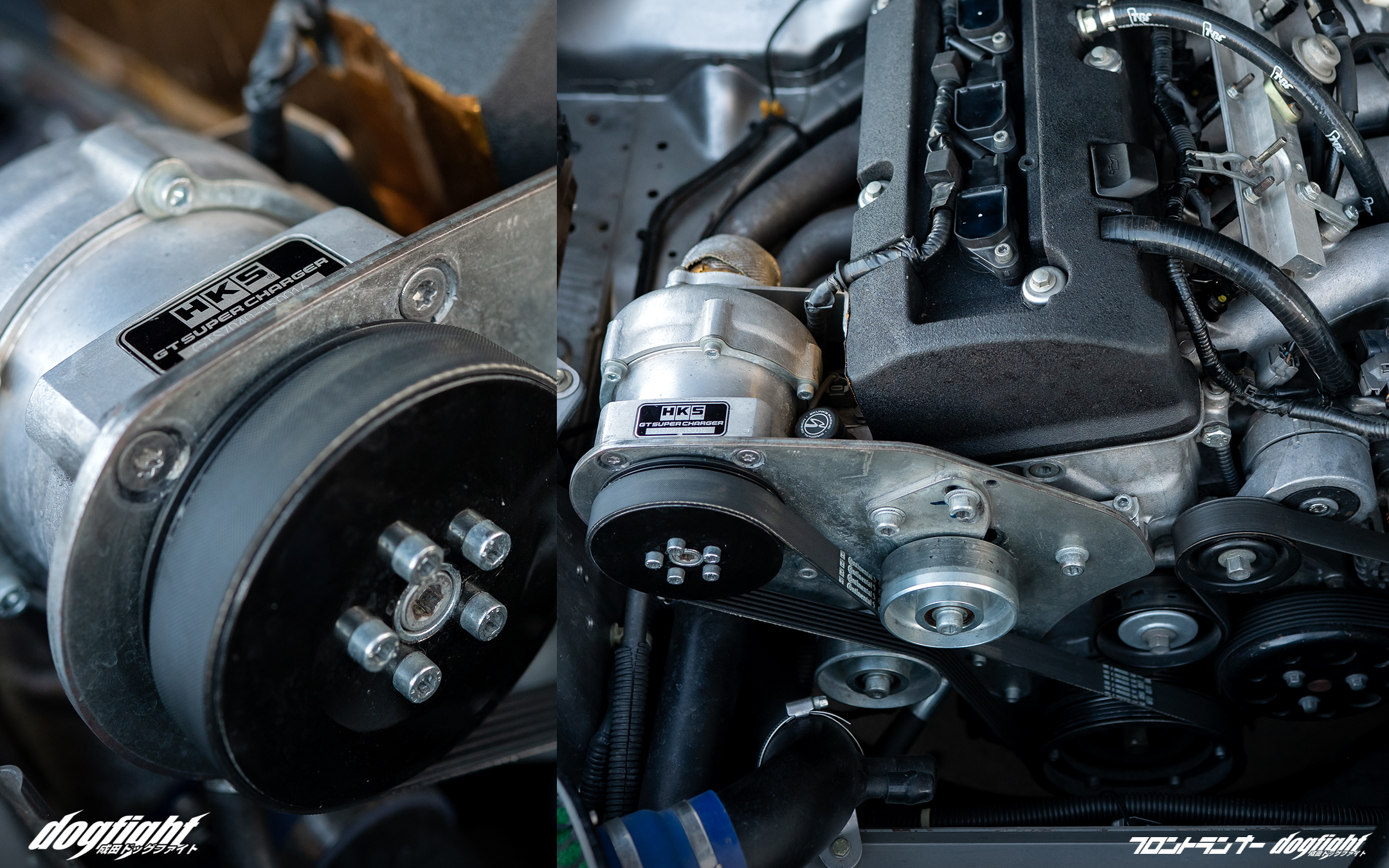
The transmission remains the factory manual, paired with an Exedy Stage 2 clutch and Competition Clutch lightweight flywheel. At the rear, Alessio runs a Carbonetics 1.5-way differential.
Suspension is handled by Eibach and Evasive Motorsport Multi-Pro R2 two-way dampers, with a JS Racing front roll-center correction kit and Hardrace spherical-joint suspension components. Innovative Mounts 75A engine, transmission and differential mounts further tighten the drivetrain and chassis response.

From there, the visual side of the car follows the same basic thinking. Japanese influence is obvious, but it has never been about assembling a catalogue of parts. Alessio has taken pieces from several different cars and eras that he likes, then worked them into something that still reads clearly as his own.

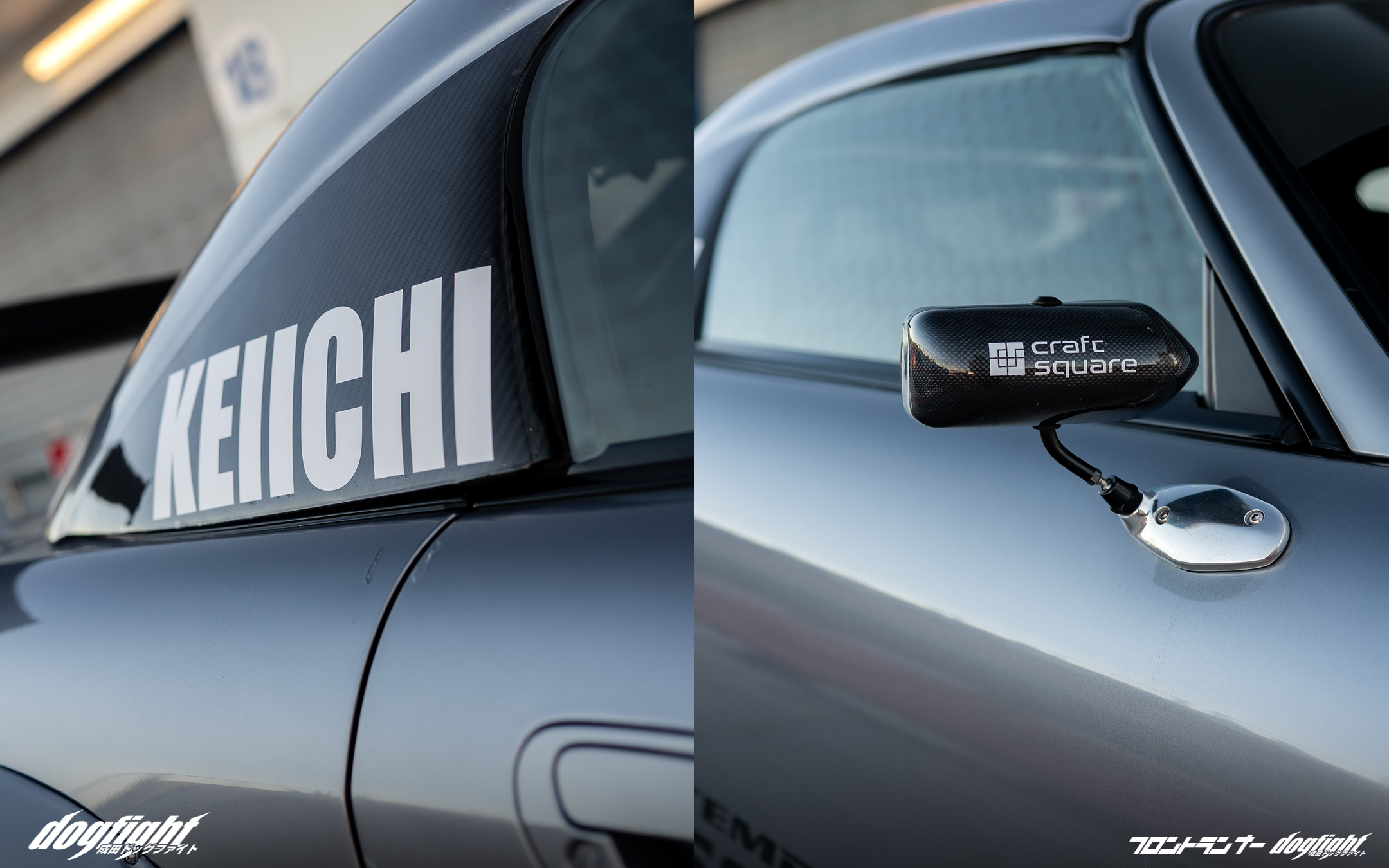

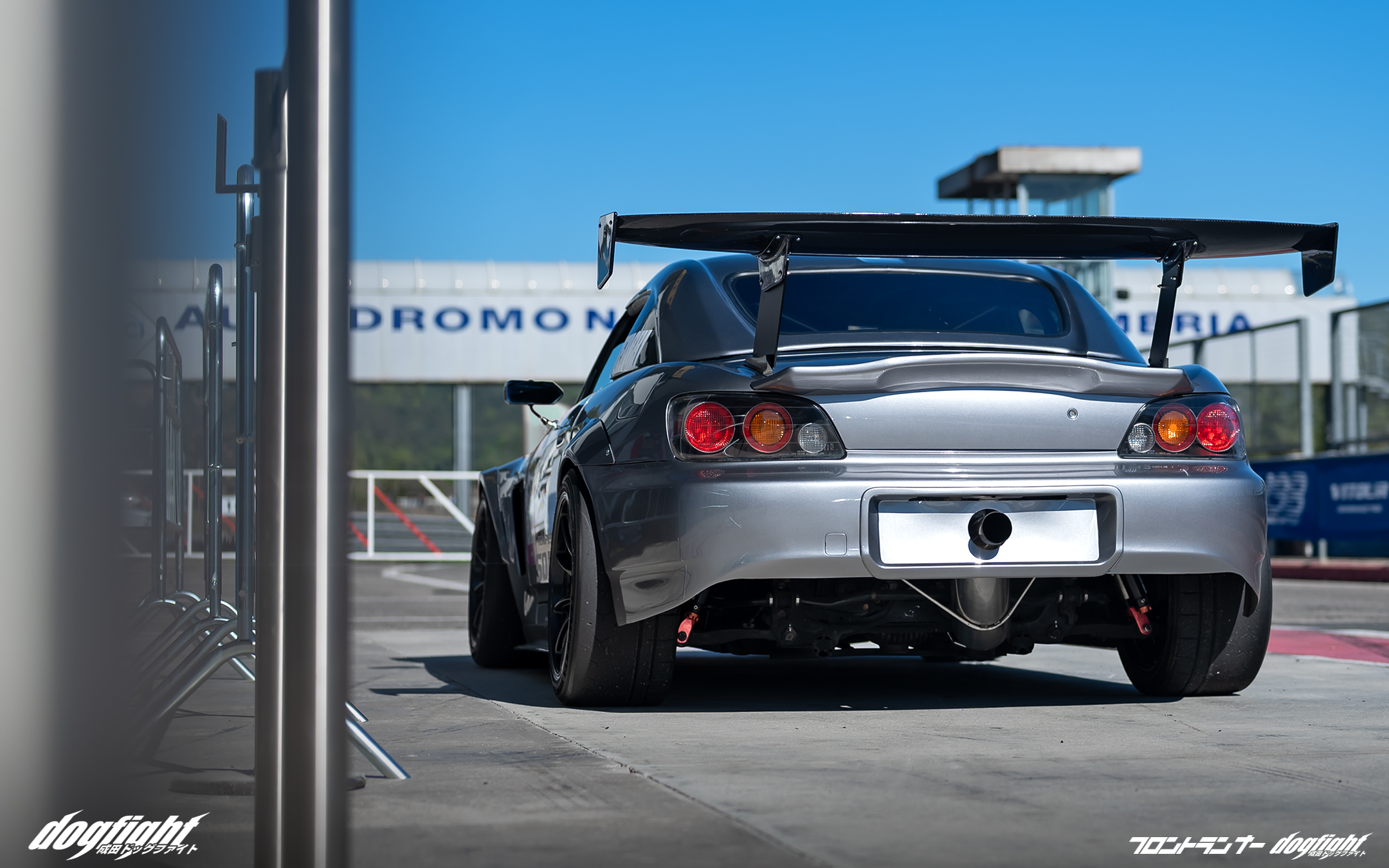
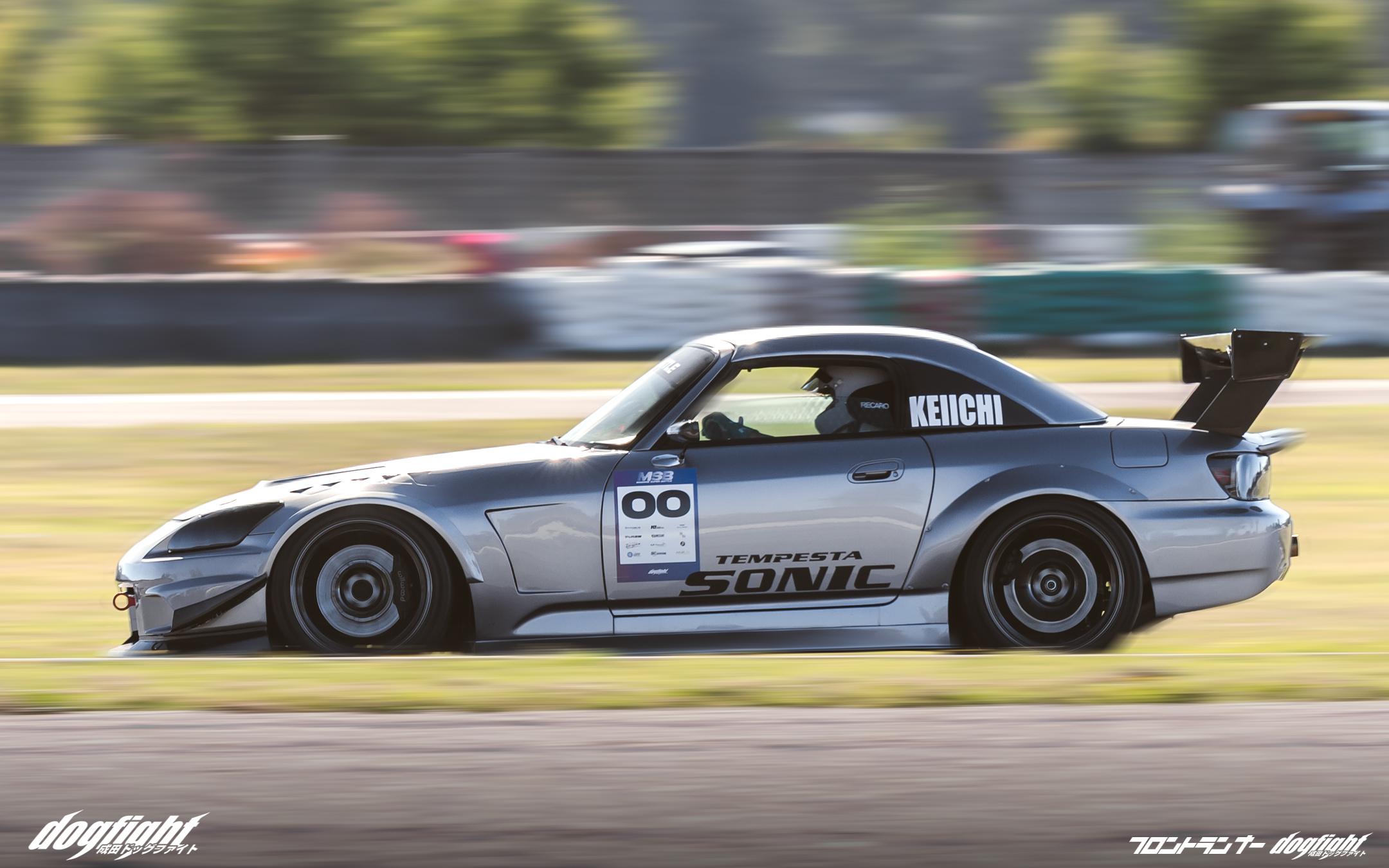
The exterior is built largely around Voltex and ASM components. A street carbon Voltex front bumper sits beneath Voltex canards, with Fiberworx front fenders combined with Voltex front overfenders. The rear uses ASM overfenders. Along the sides are Sixth Element carbon side skirts, while the hood is an Amuse-style replica and the hardtop follows the Mugen design. At the rear is an 1800 mm Esprit 052 GT wing originally intended for an FD RX7. The smaller details are equally considered. Craft Square mirrors, a K1 Laboratory rear ducktail and dry carbon headlight delete covers from AL.MA all contribute without pulling attention away from the overall shape of the car.

The overall look of the car is one that would fit in perfectly on the streets of Japan, or even Southern California, where Japanese tuning influence has been carried over with a level of detail that few places outside Japan can really match.
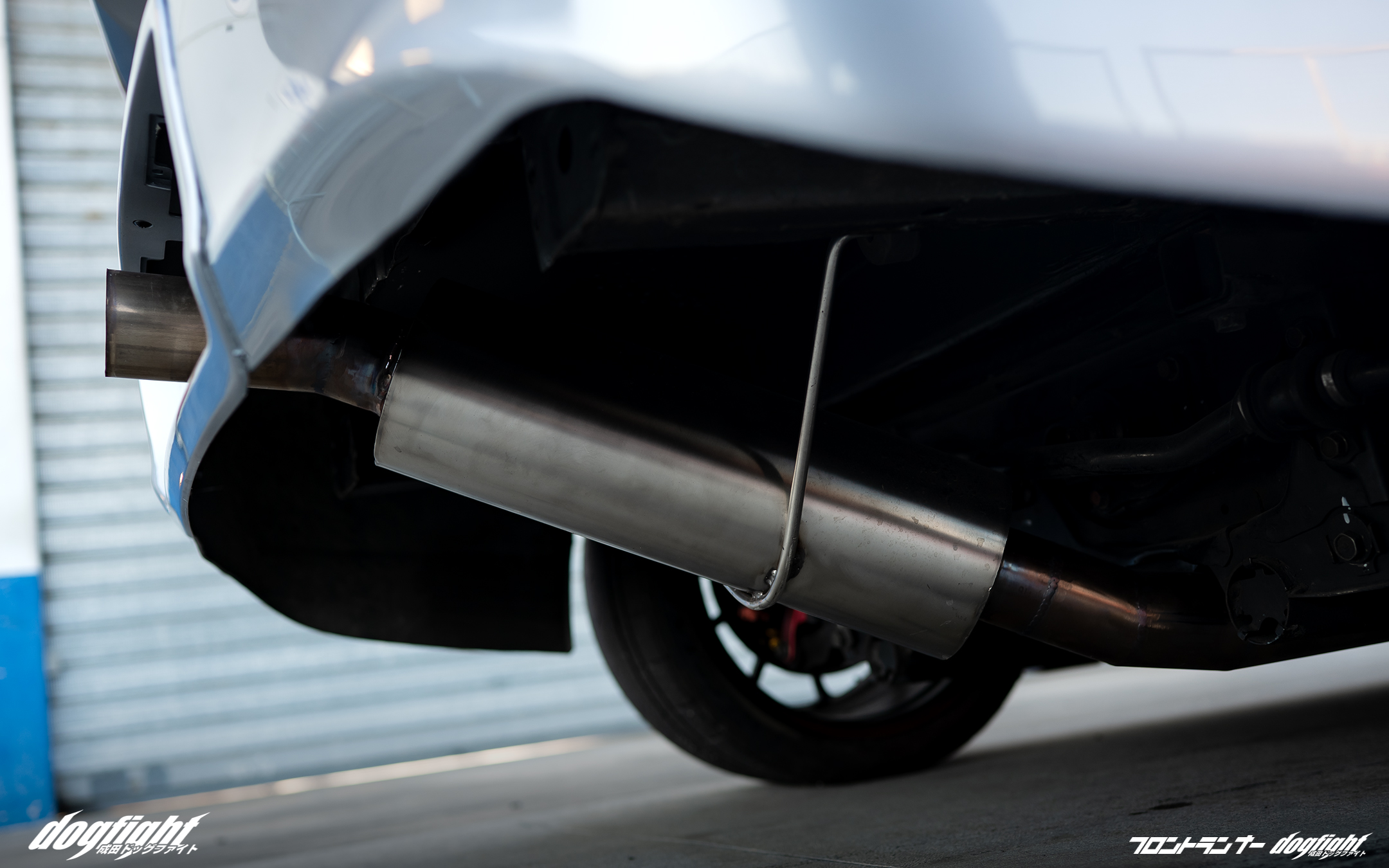
The rear bumper was modified around Alessio’s own exhaust layout. The factory bumper was cut and reworked around the license plate area to accommodate the central exhaust, while the rear section of the trunk was internally cut and reinforced to properly support the wing. None of it feels like aero added simply because a time attack car is expected to have aero – its actually fairly mild compared to what we typically see.
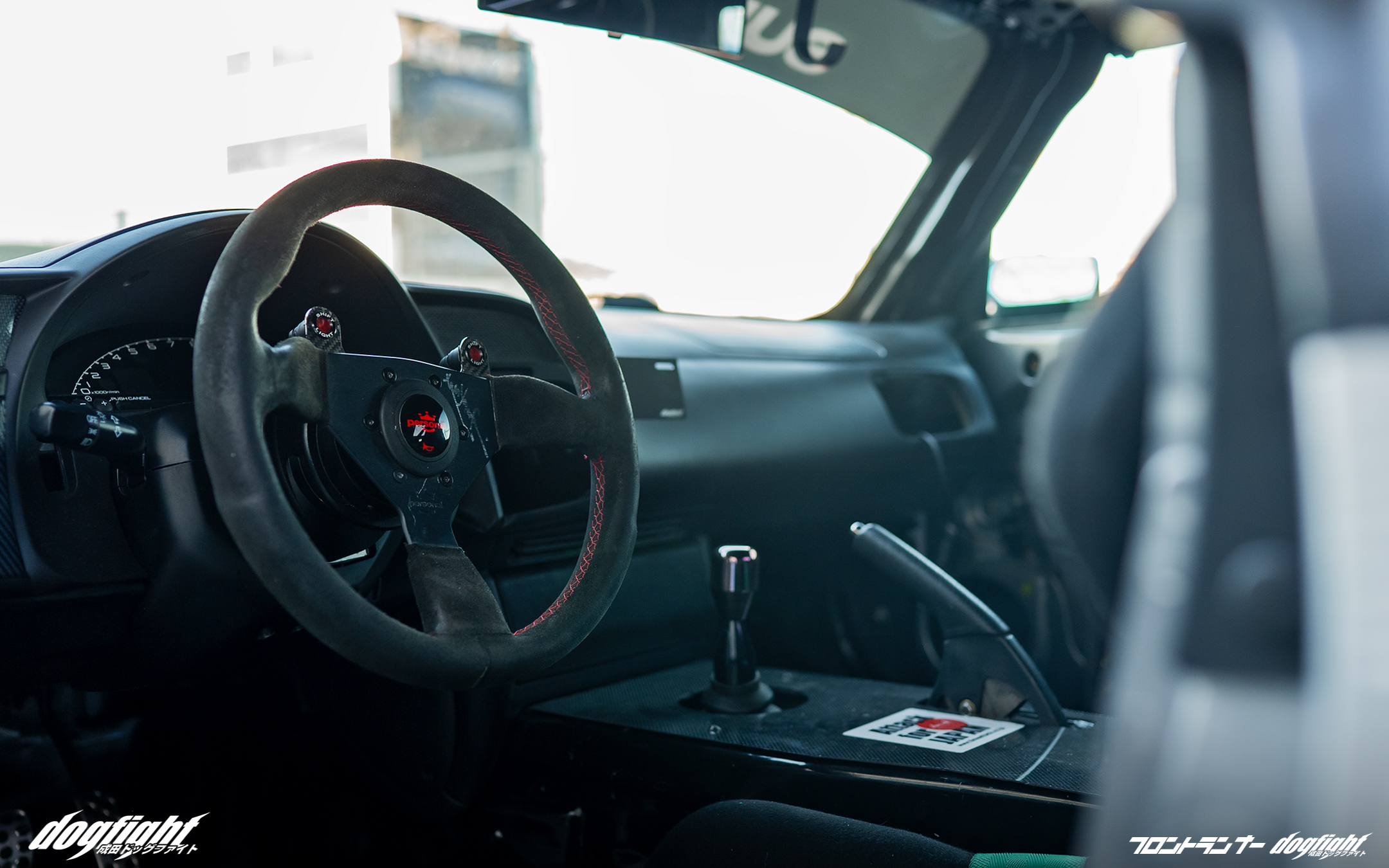
Inside, the S2000 stays relatively simple. A Recaro Pro Racer Kevlar seat is paired with a Takata four-point harness and an Ag Works half cage. A 2.2 kg Noco Motorsport battery reduces some unnecessary weight, while a 330 mm Personal Neo Grinta steering wheel has been modified with a custom shift light. An NRG hub and quick release complete the steering setup, with an AiM Solo 2 DL handling lap timing and data alongside an NDF support mount.


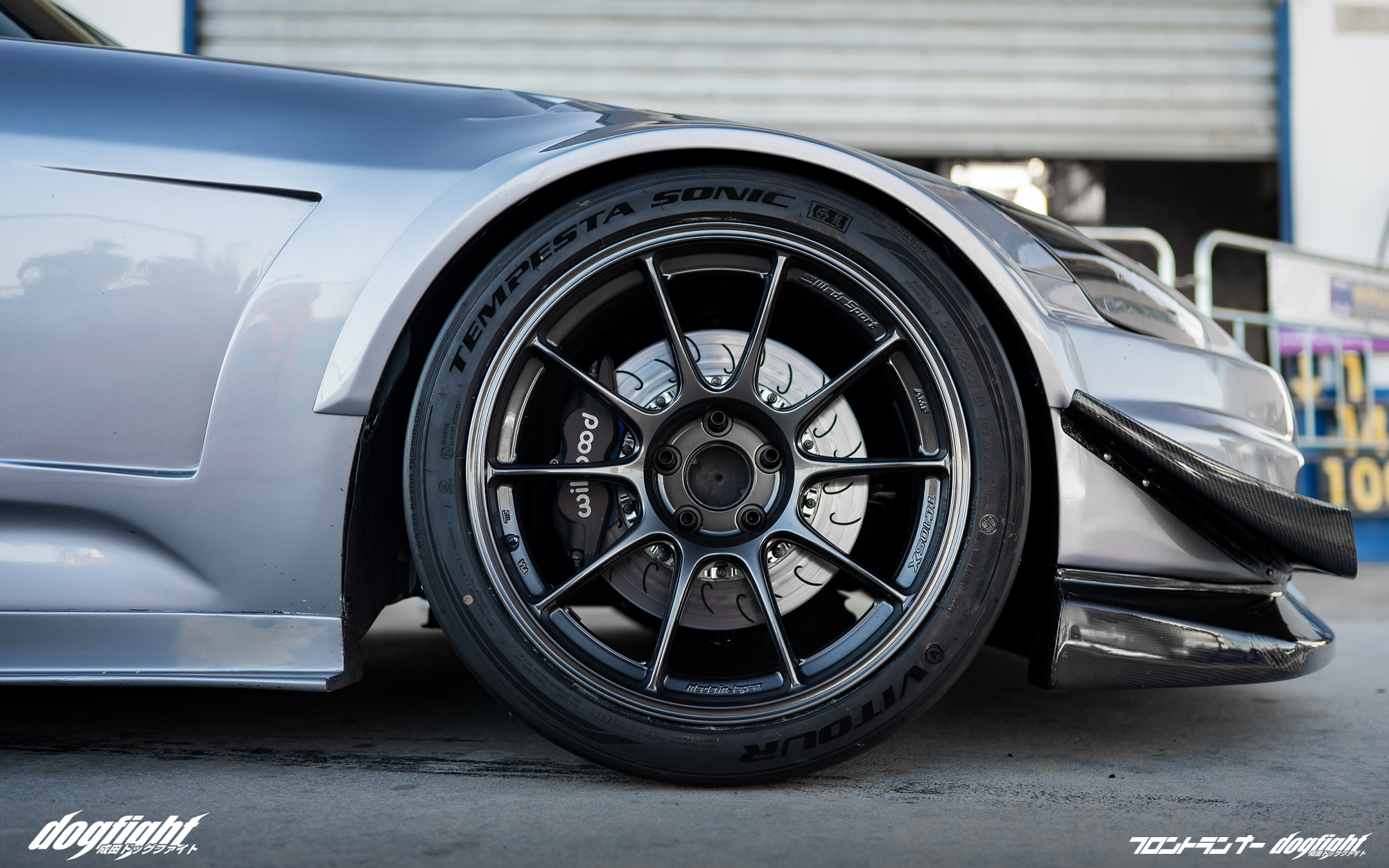
The wheel and tire combinations change depending on where the car is being used. A set of WedsSport TC105N in 18×10 +20 is paired with 265/35R18 Vitour Tempesta Enzo tires, while Alessio also runs 265/35R18 Yokohama Advan A050 GS for the more serious track setup. The braking setup is equally purposeful. Up front, Wilwood four-piston BPK calipers clamp 330×32 mm two-piece Tracksolution rotors through custom brackets, with Endless pads. The rear retains the factory calipers but uses 330 mm Ballade Sports rotors and Carbonetics racing pads.
That second combination has already produced a 1’18.7 at Magione. At Mugello, the car has run a 2’09 on A052. For Alessio though, neither represents the final target. When I asked about the future of the S2000, his answer was simple – ‘ship the car to Tsukuba.’
That has effectively become the end goal of the entire project. MSB takes up most of Alessio’s free time now and, like most worthwhile grassroots motorsport projects, very little of it makes financial sense. Media, guests and the event itself cost money rather than generating it. The reason it continues is because the objective was never to turn it into a conventional business.
The objective has always been Tsukuba.
Alessio came close to sending the cars last year, but the timing did not work. The next MSB event will be smaller, and afterwards the focus shifts back toward Japan. The plan is ambitious. Alessio wants to bring the S2000 to Tsukuba, drive TC2000 himself, and eventually enter Attack. If everything comes together, the team would become the first European group to send their cars specifically to compete in the event.
There is an amusing circularity to that. A person who spent years flying from Italy to Japan to understand Japanese time attack eventually created an event at home because nothing similar existed there. That event helped shape the car he wanted to build, and the car is now being developed with the intention of returning to the place that influenced all of it.
Even the people Alessio wants involved are part of that history. Tsuchiya, Orido and Tarzan are not names selected because they look good on an event poster. As meaningful as those relationships are, they still point back toward the same place where this entire interest began.
As he told me, once the wheels touch Tsukuba, he can close everything. I understand exactly what he means, which is probably why we get along as well as we do. I’m thankful to be a part of Italian Super Battle this year, and wishing Ale and the team all the best on the road to Tsukuba.


Discover more from
Subscribe to get the latest posts sent to your email.