

Since its debut in 2023, the RE Amemiya x Power Craft NA7 has been one of my favorite cars in the Japanese time attack scene. I didn’t get to spend as much time with it that first season as I would have liked, so in 2024 I made a point of it.
The first real time I had with the car came during a Tsukuba test in early January of that year. I talked briefly with Ikeda and the crew, but given their schedule I kept it short and spent most of the time just watching. Having the car isolated from the noise of a full event was the right environment to take it in properly. The smooth but pronounced lines of the D1 kit, the sound of the NA 20B at idle, and the contrast in volume as Ikeda put it down the front straight. That was the day I filmed this original Machine Check video introducing the build to NDF for the first time.
Over the following months, through practice events leading into the Attack Championships, I had more chances to see it on track. During a Zummy Racing event on February 12th I ran into Amemiya-san, who had come out alone to watch. He opened up a conversation and we talked for a while, restricted somewhat by my conversational Japanese, but it was enough. It wasn’t the first time I had met him, though I didn’t expect him to remember that. What struck me again was how approachable he is for someone whose name carries the weight his does in Japanese tuning. I took a lot of reference photos on my phone for my own FD build. The D1 kit is something I’d been lukewarm on for years, but the NA7 changed that. There are specific reasons this car makes the kit look better than most; the swept GT wing, the narrow spokes of the GTC02, the thin sidewall of the 295/30 A050, the ride height. A lot of D1 kitted FDs are on a wider spoke wheel with a higher ride height, and those two things have a small but meaningful effect on how the overall build reads.
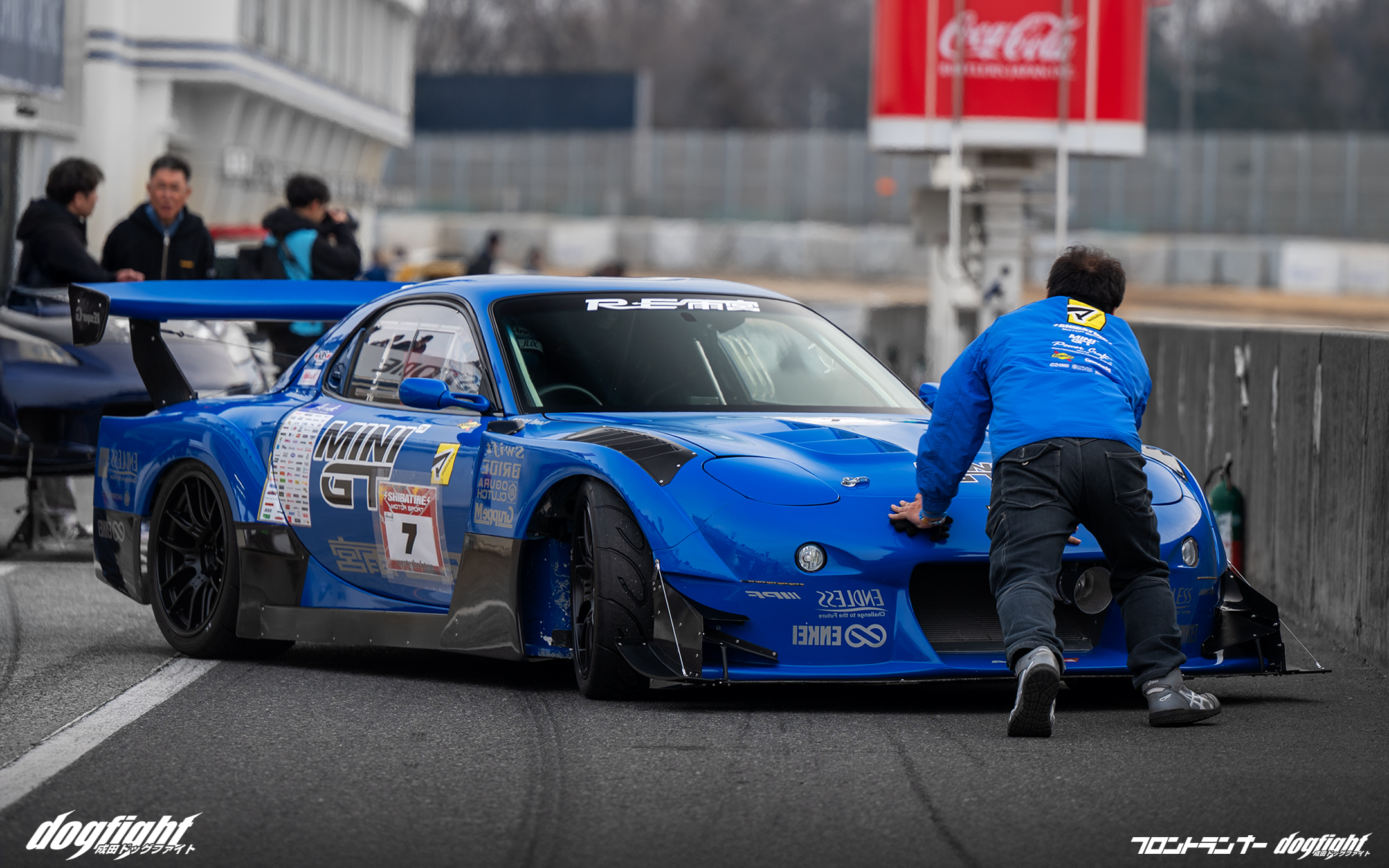
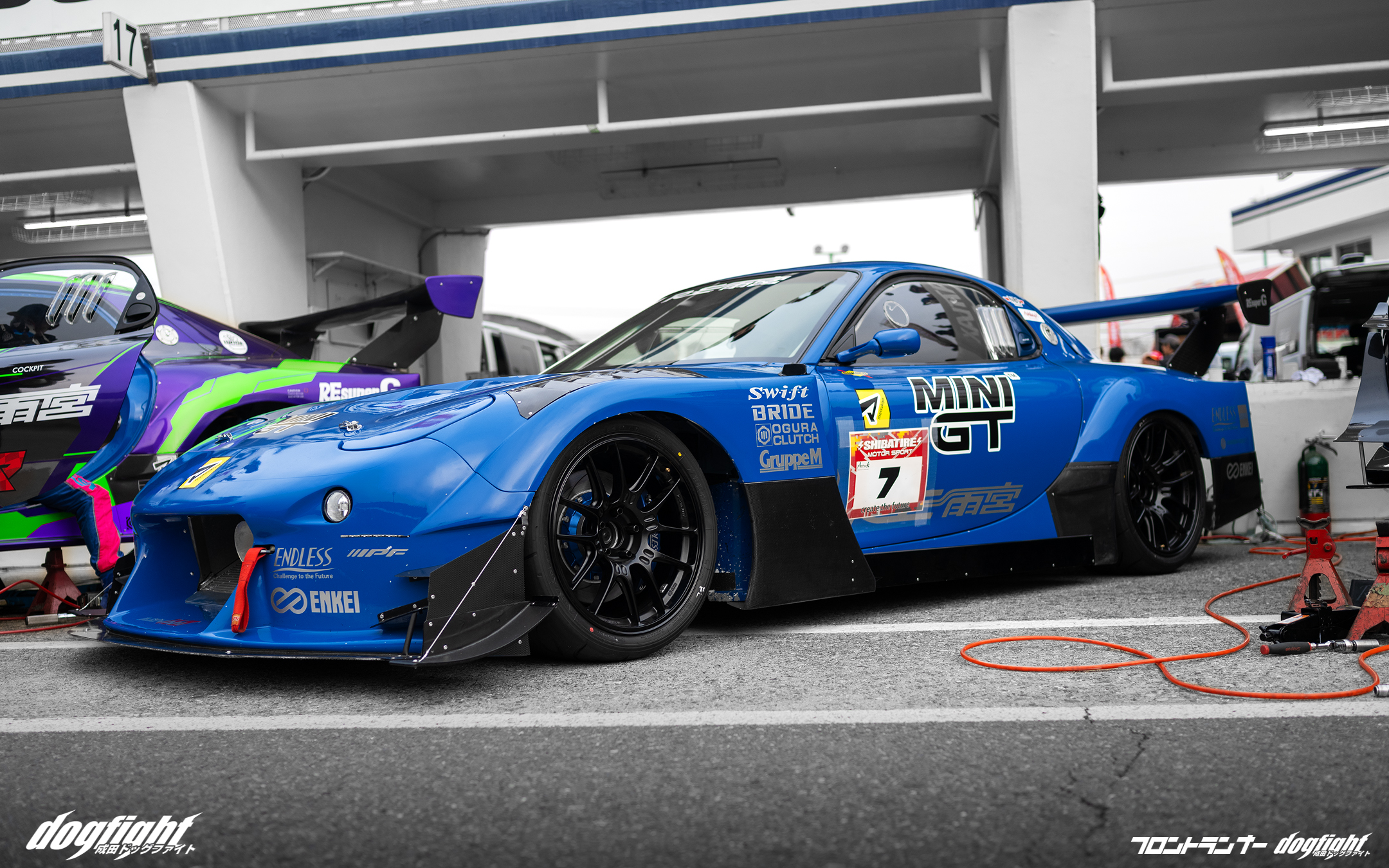
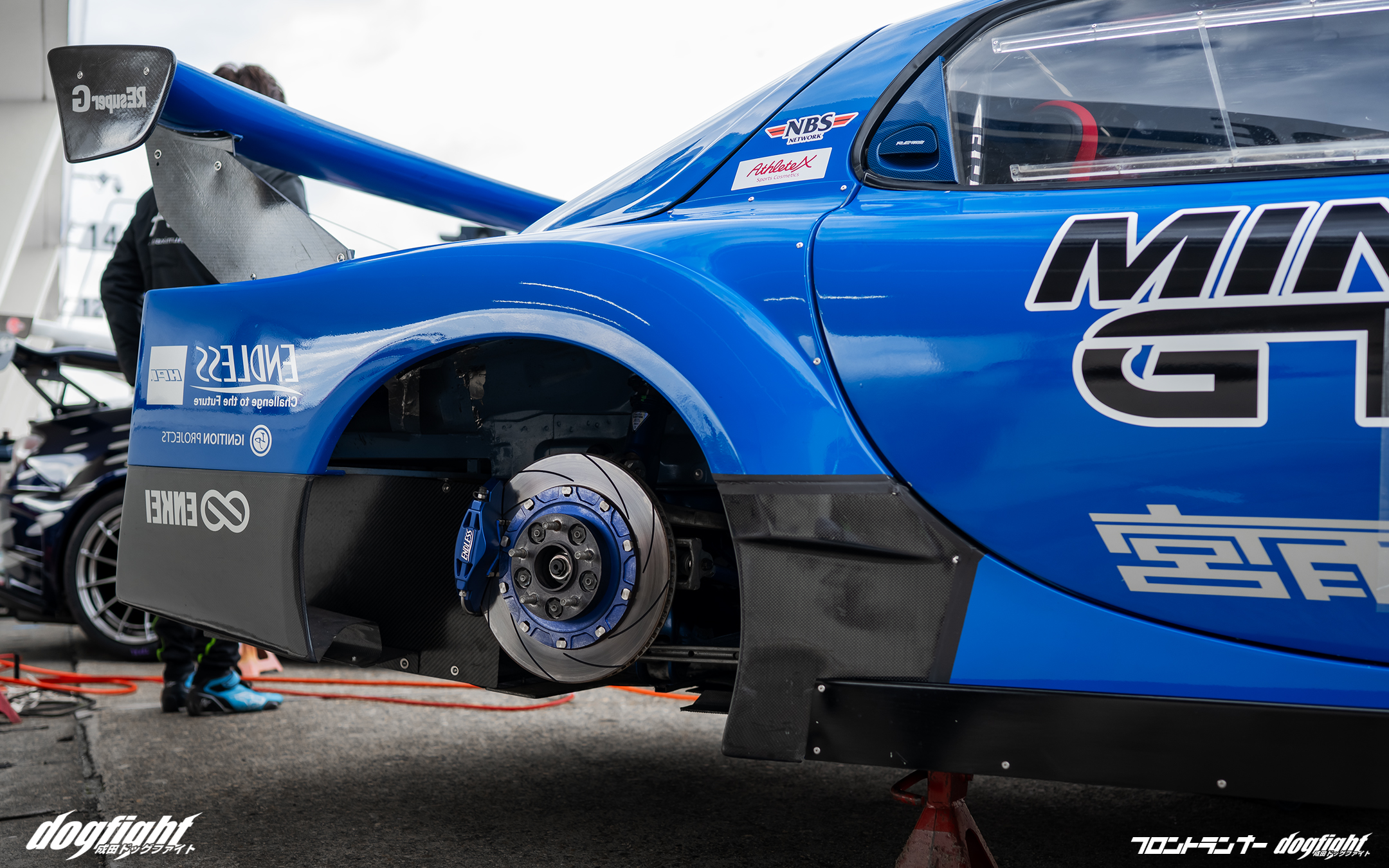
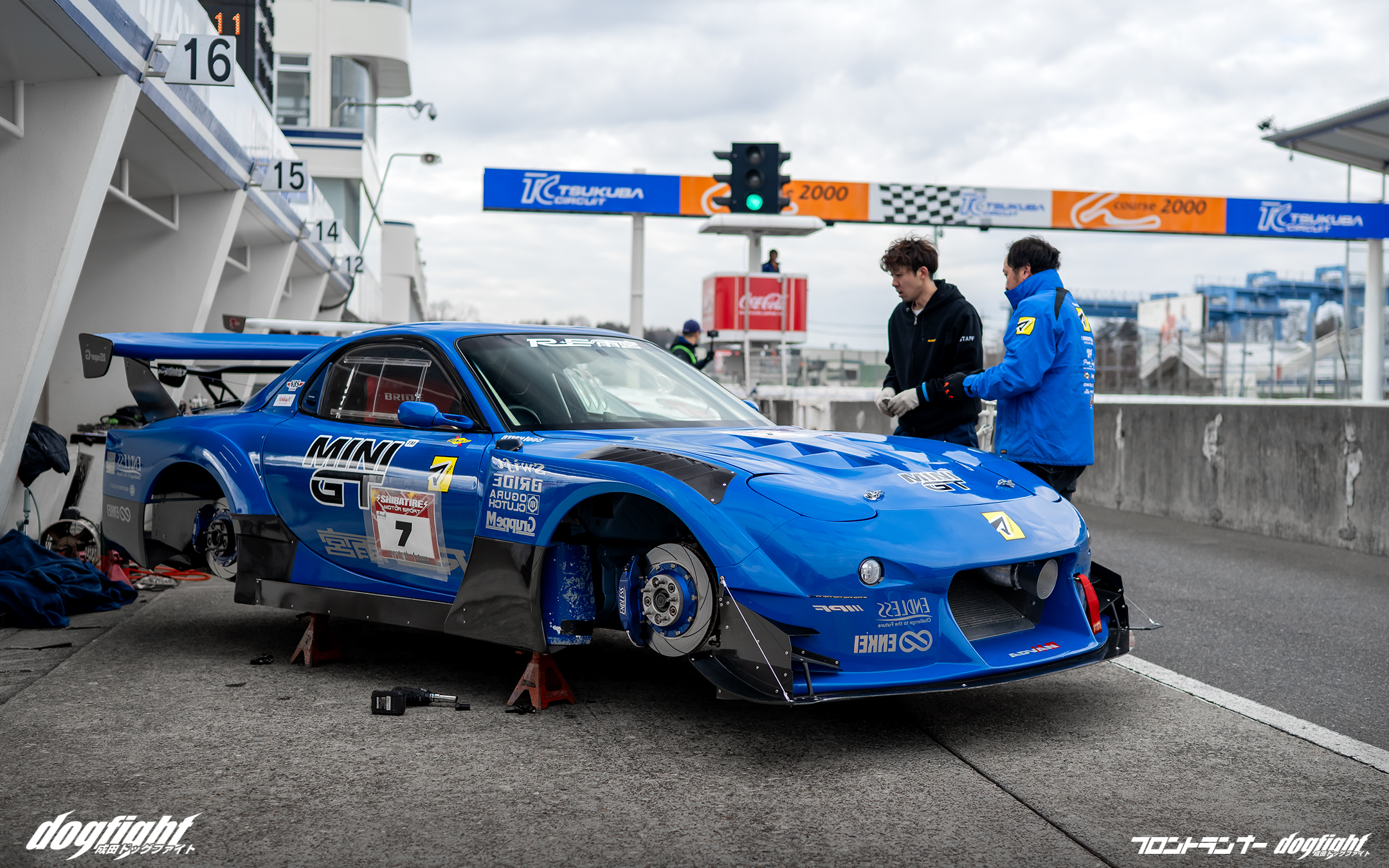

So going into 2026, with the car returning in a new livery under the RE Matsukiyo Mini-GT name, you can be sure that I was paying close attention.
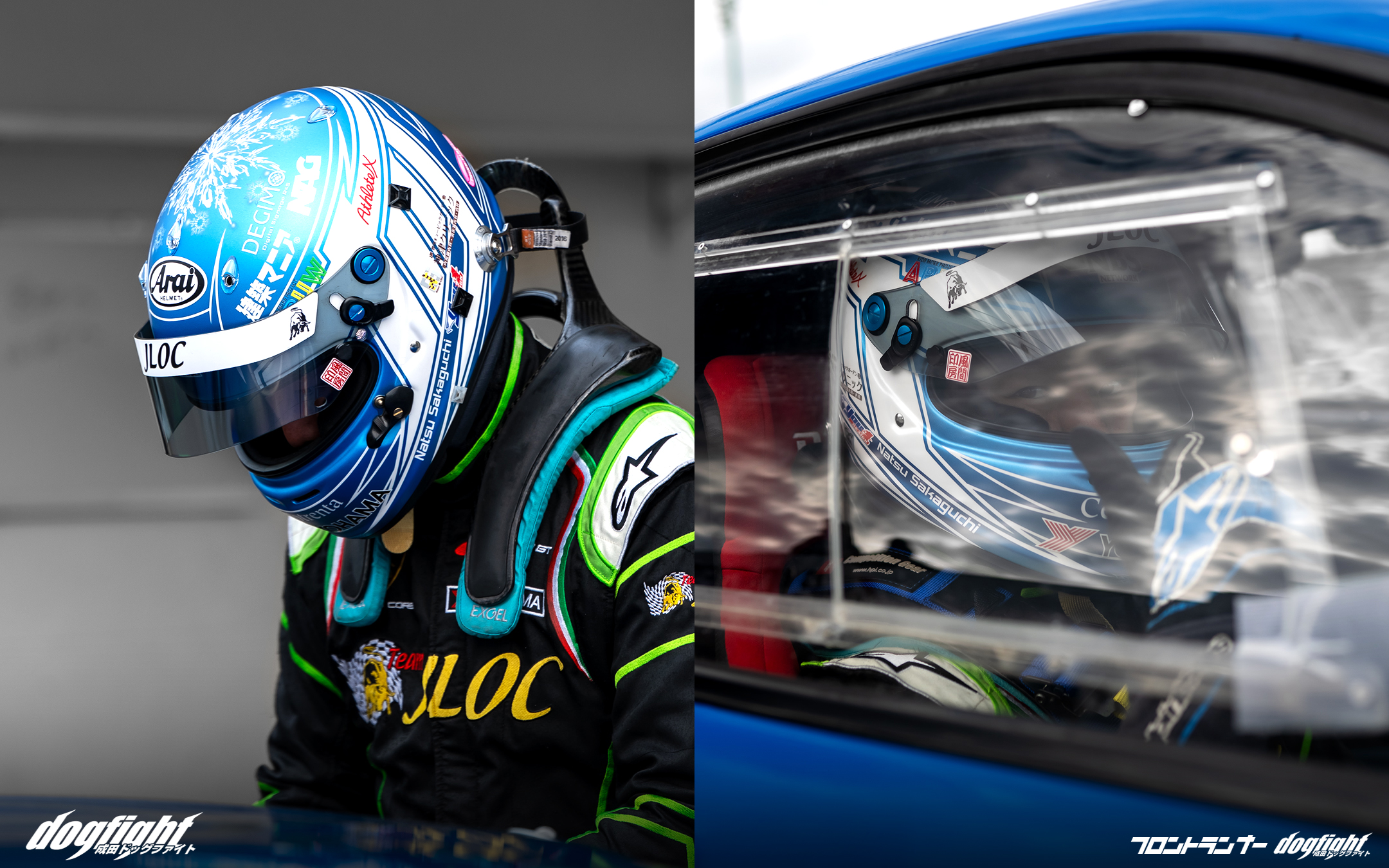
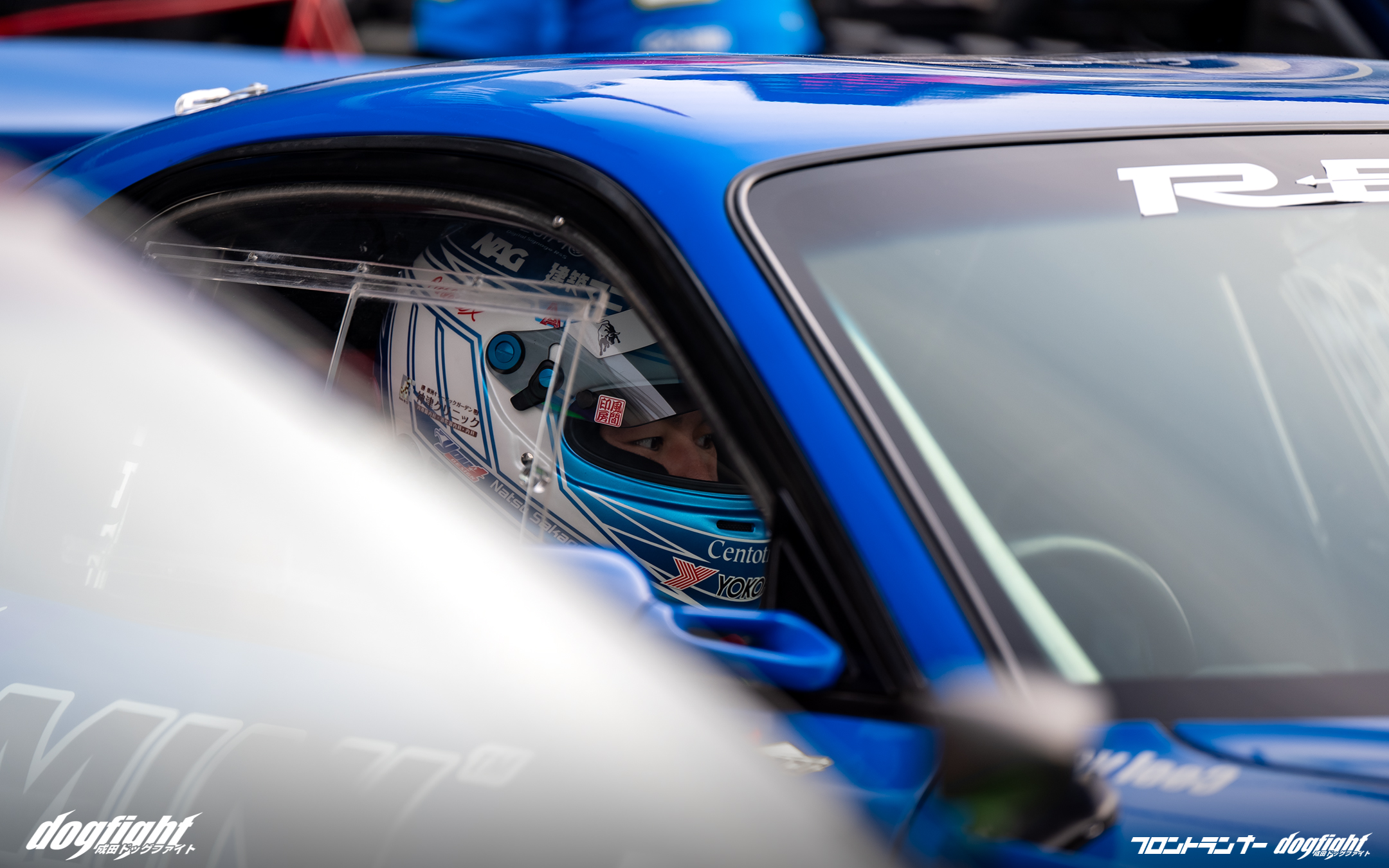
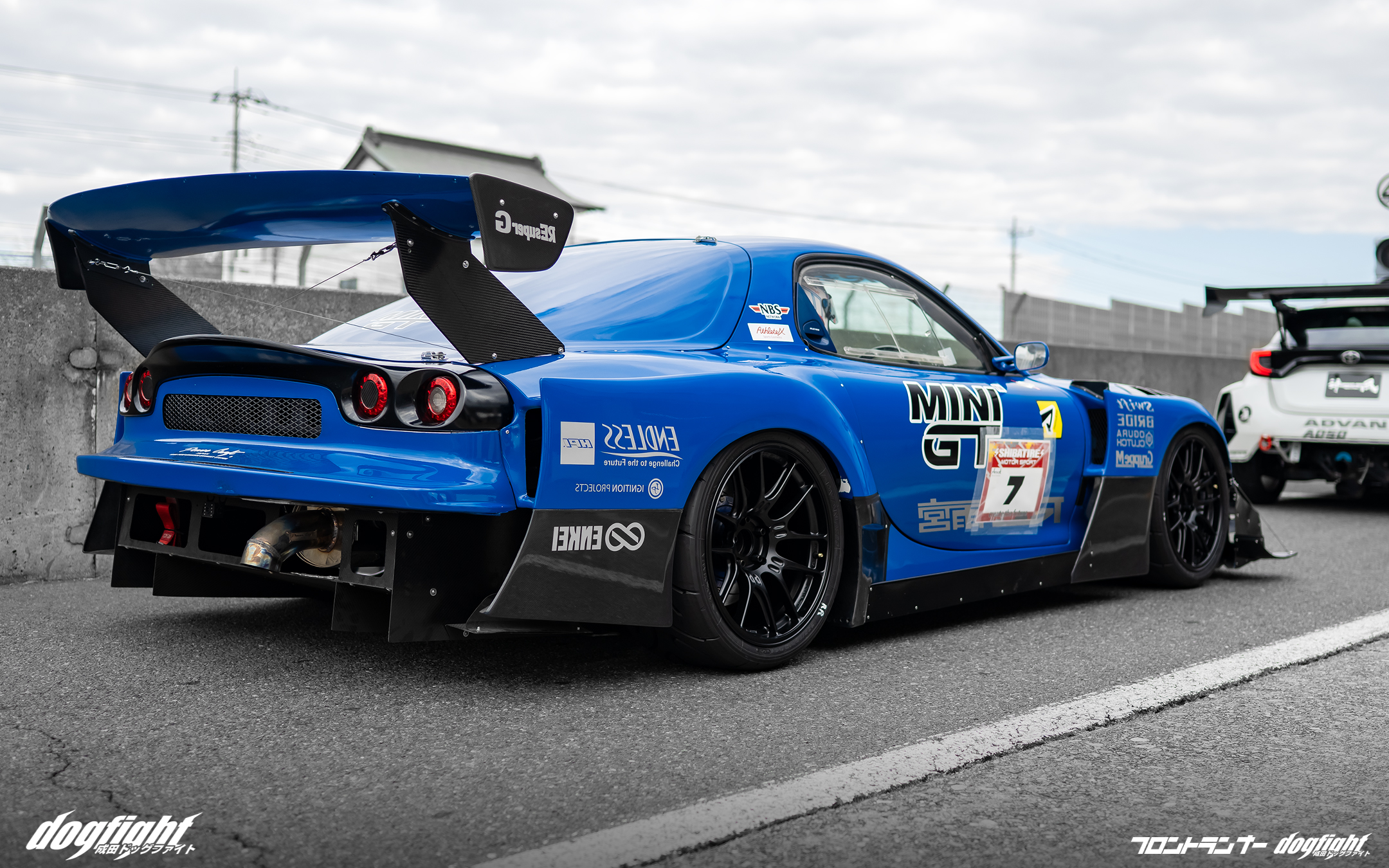
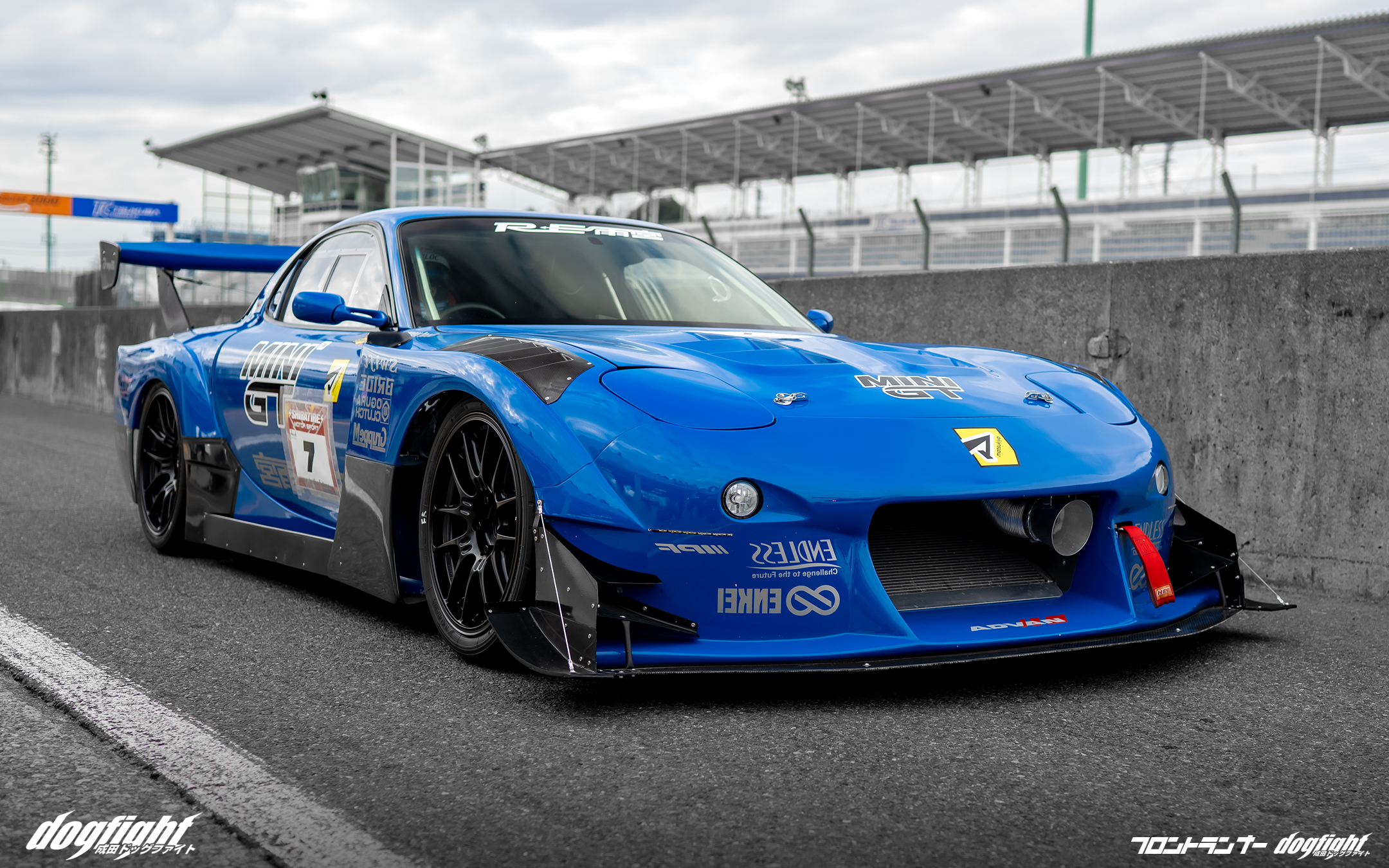

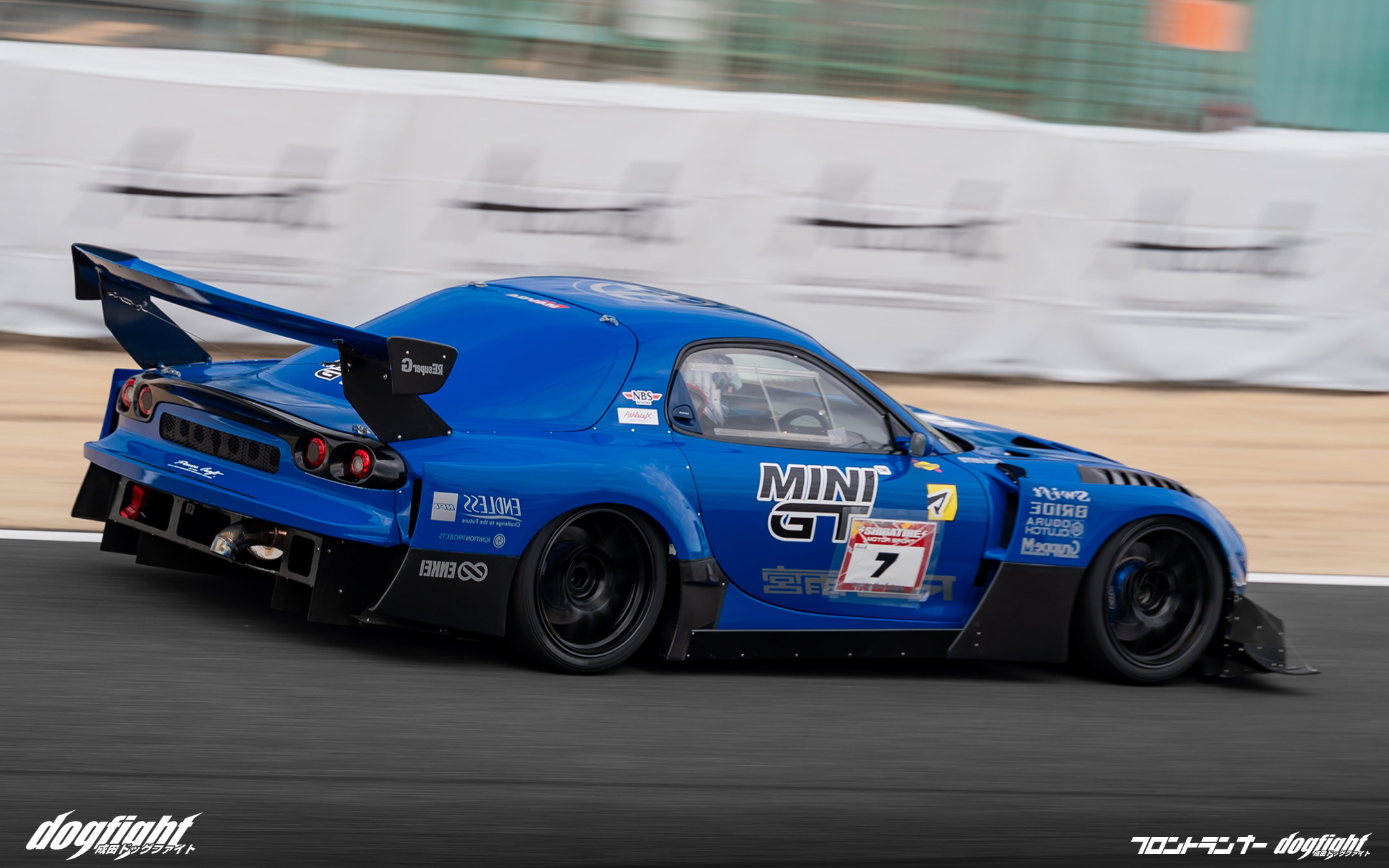
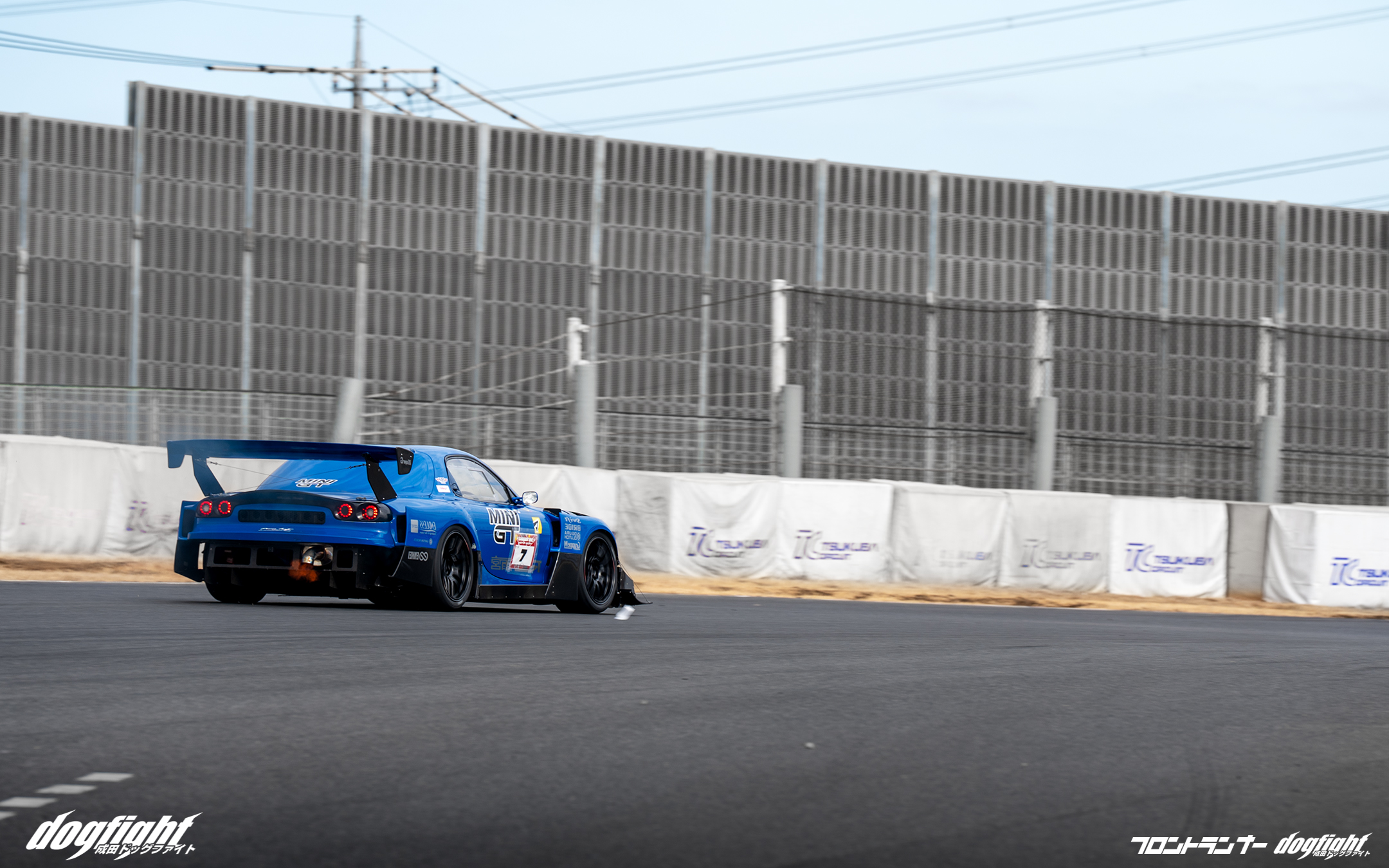
For this season, JLOC’s Natsu Sakaguchi took the wheel of the NA7, with Ikeda handling the two other RE Amemiya entries at Attack Tsukuba. Sakaguchi has spent nine years in Super GT’s GT300 class with Team Mach and JLOC, with multiple podiums and an overall win at the 2021 Fuji 24 Hours alongside Kosuke Matsuura. He knows what a competitive car feels like at the limit. What makes the pairing interesting beyond his resume is that he owns an FD3S privately, bought specifically because of RE Amemiya’s GT machines. He came into the seat already familiar with the car in a way that goes beyond having read the spec sheet. With a single test session prior to the pre-event practice on February 13th, he put down a 54.329 at TC2000. That time was good enough to overtake Yuki’s Y’s Produce 4-rotor record of 54.516, which had only stood a couple of weeks, and put the NA class record in RE Amemiya’s hands.
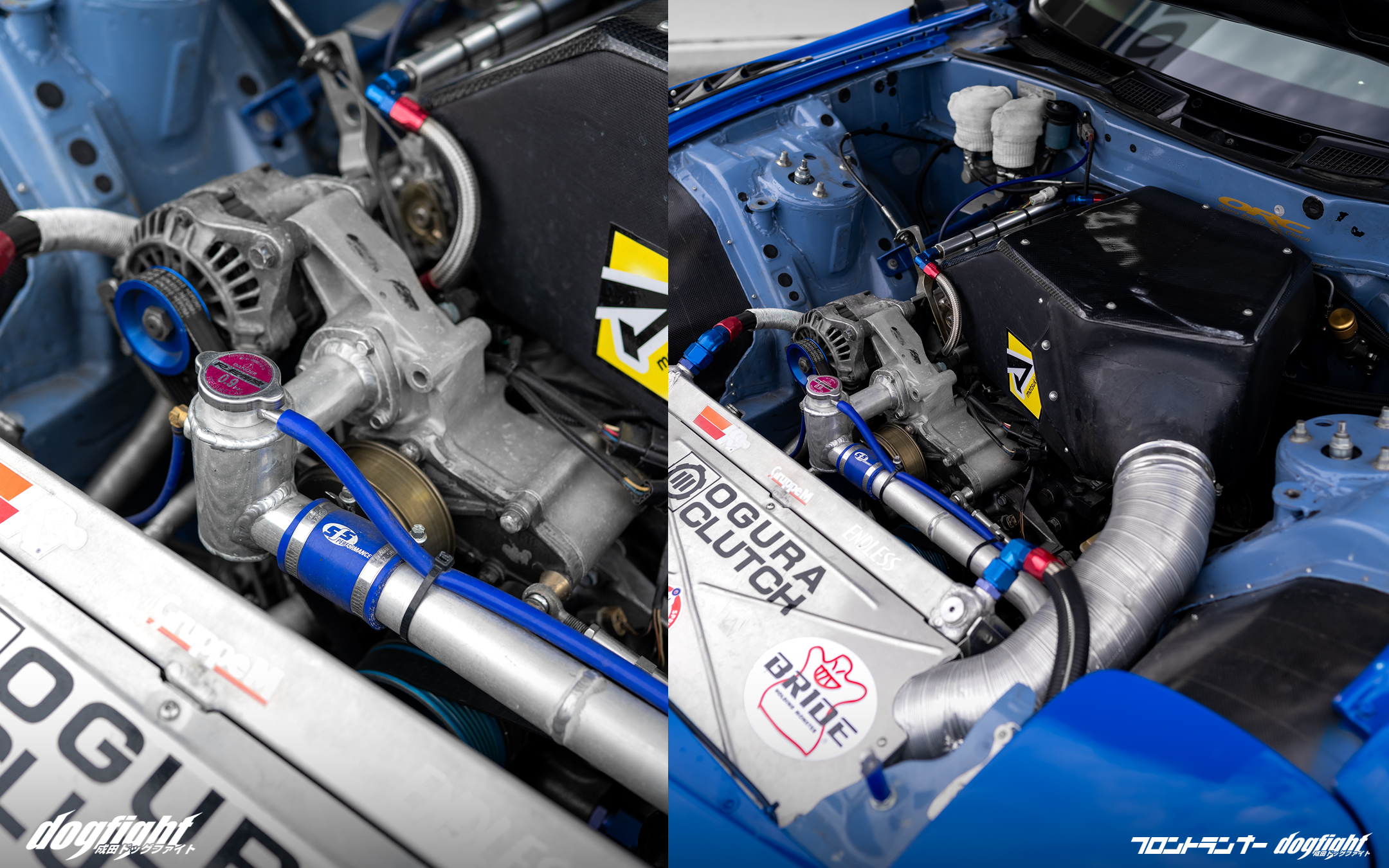


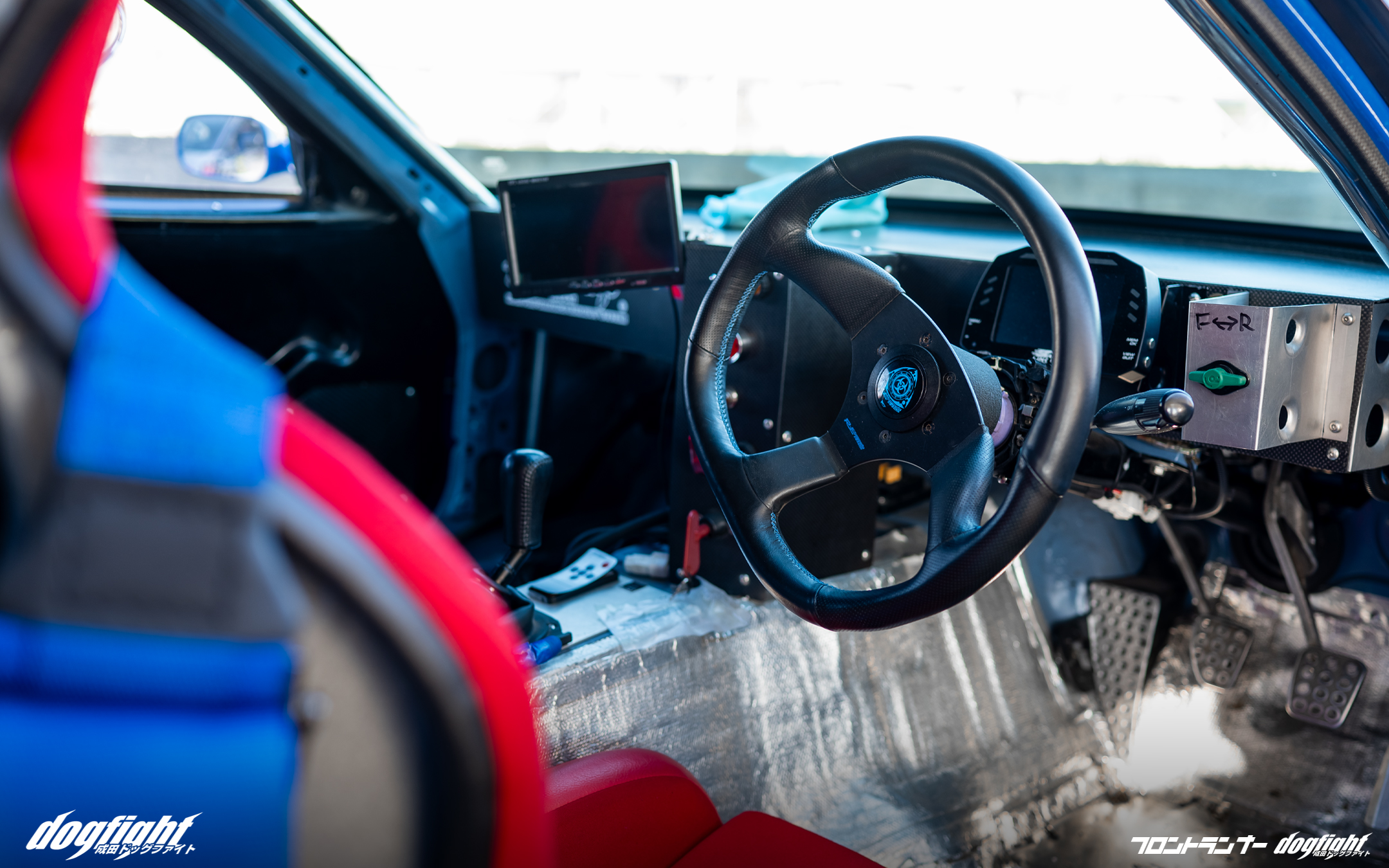
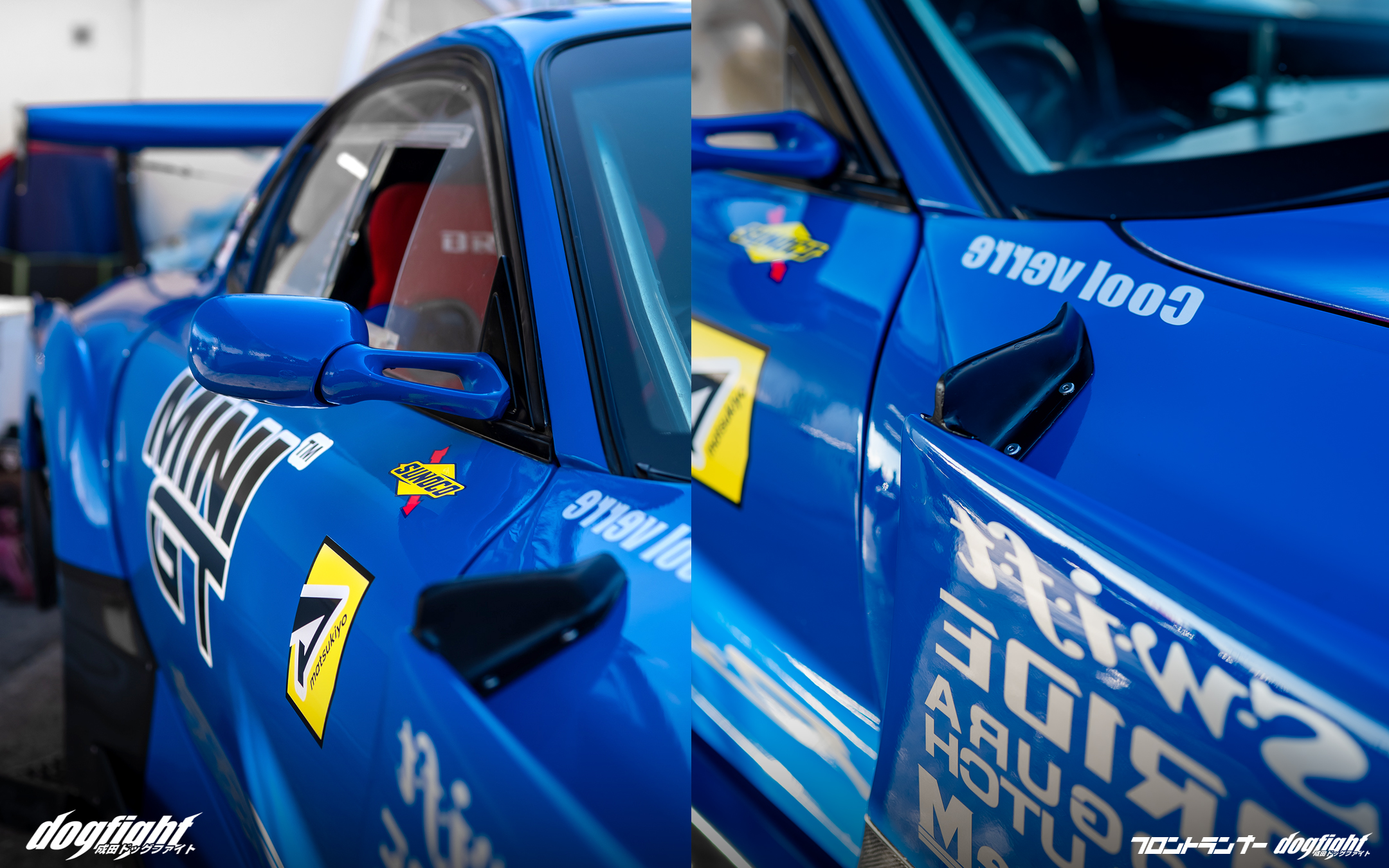
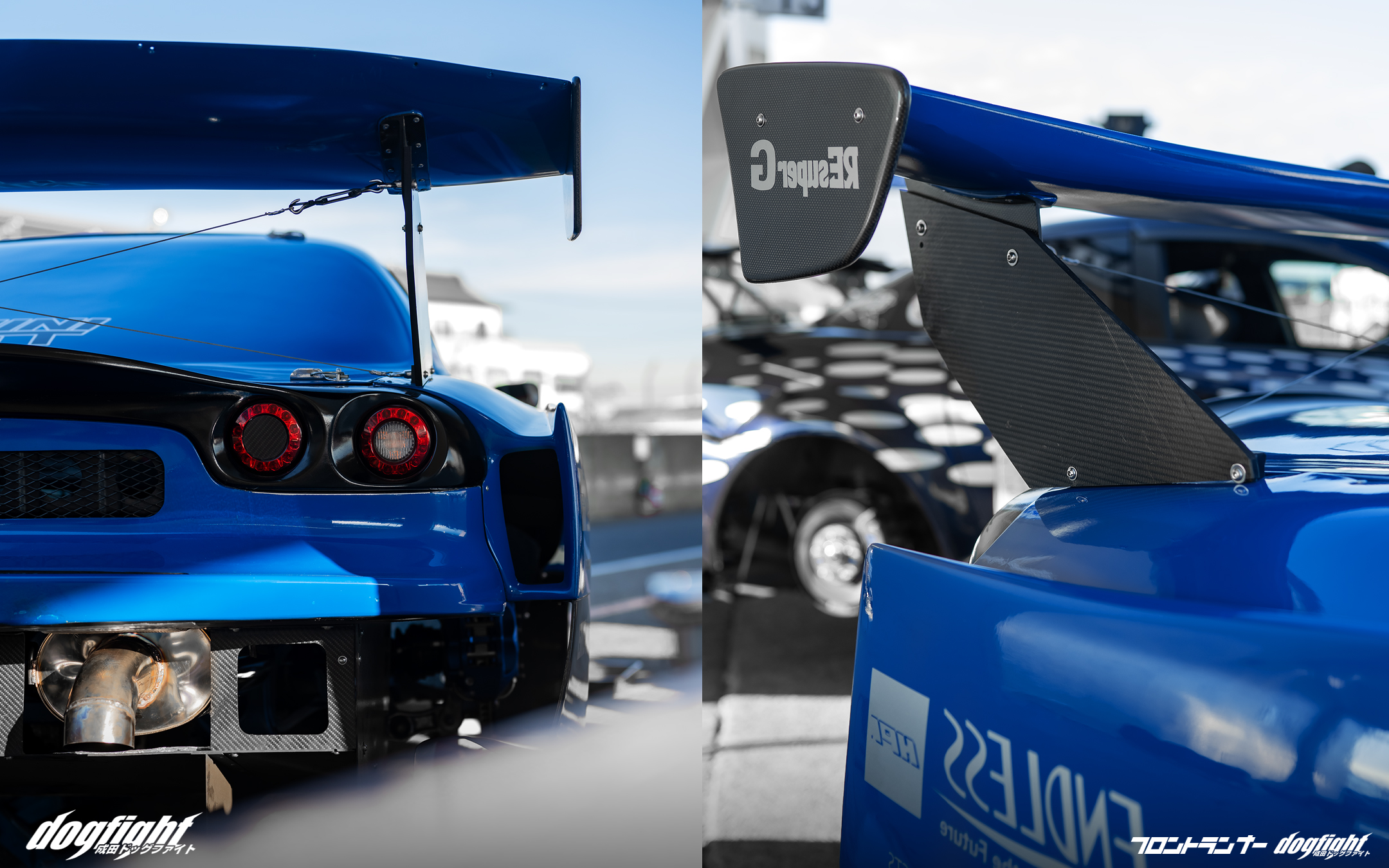
The 2 liter, 3 rotor in the NA7 has direct Super GT lineage with the power unit being an almost unrestricted version of the engine that powered the famous GT300 Amemiya x Aspara Drink RX7 from 2004. It runs a peripheral port configuration, meaning the intake ports are cut directly into the rotor housing rather than through the side housing. That distinction matters because it changes how the engine breathes at high rpm and, consequently, how it delivers power. The naturally aspirated output is around 430ps, which is about 100 more than the GT300 variant, and a redline well over 9,000 rpm giving the exhaust note a beautiful, high pitched tone reminiscent of the Super GT car.
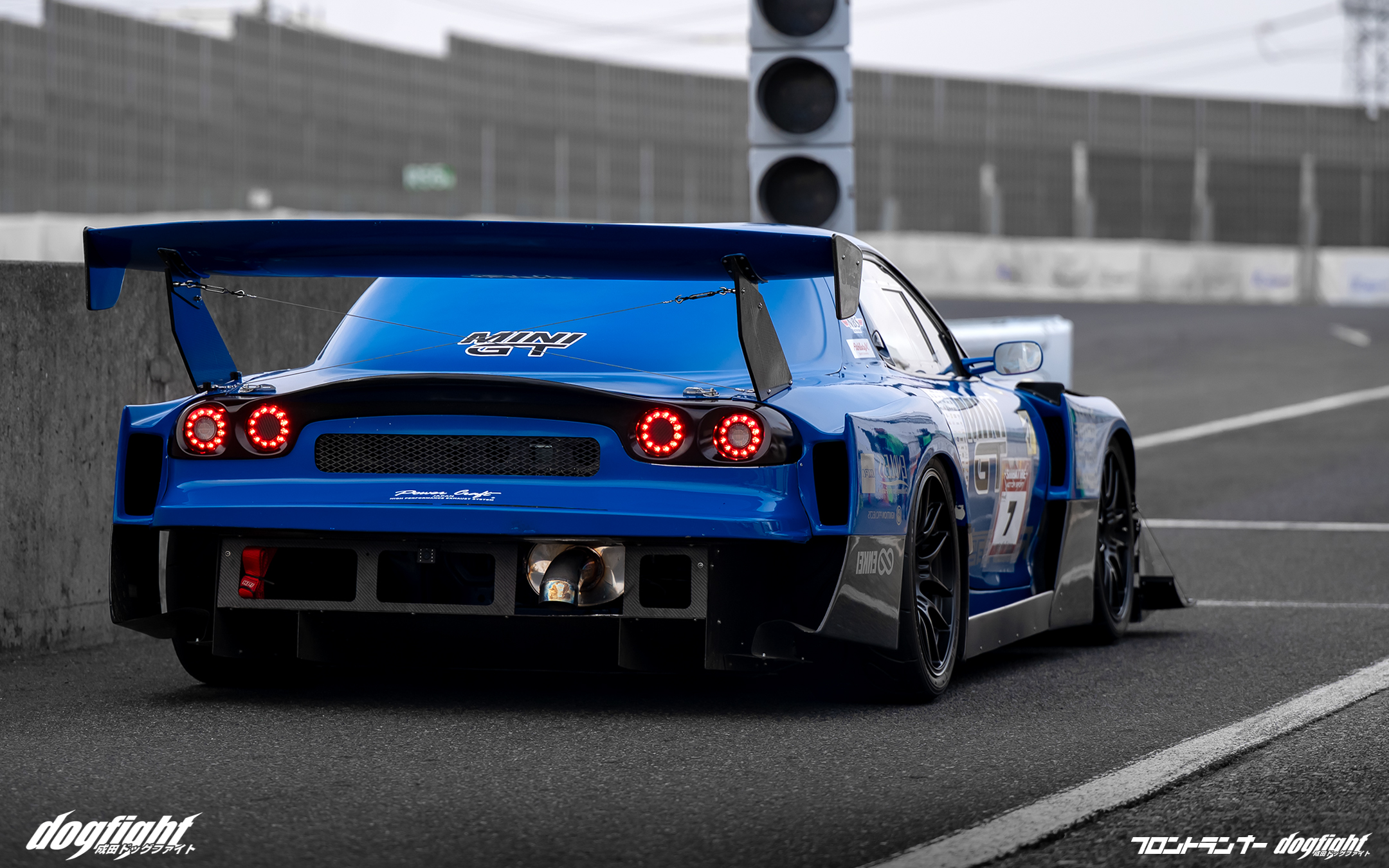
Engine management is handled by a LINK ECU, with calibration done by Amemiya-san’s grandson who handles most of the in-house tuning these days. The one-off carbon plenum covering the individual throttles is made by K&N, surprisingly, and exhaust exits through a custom titanium Powercraft system. The exhaust was modified to add a muffler in-line, and a new downturned tip was welded at the exist in order to meet Tsukuba’s new noise regulations.
Sakaguchi described the driving experience plainly.
通常のNA車と同じように、コーナーの途中でスロットルを開けてみると、リアが既に動き出し、アクセルを踏み込む前にトルクが生まれます。適切なコントロールを行えば、この車が実現するコーナリングスピードは、NAクラスの他のどの車にも匹敵しません。予測不可能という意味で難しい車ではありませんが、従来のNAセットアップでは求められないレベルの精度が求められます。
“Try to feed the throttle mid-corner the way you would in a normal NA car and the rear is already moving, the torque is there before you’ve finished the input. Get the management right and the cornering speeds available in this car aren’t on offer anywhere else in the NA class. It’s not a difficult car in the sense of being unpredictable, but it does require a level of precision that a more conventional NA setup doesn’t demand.”
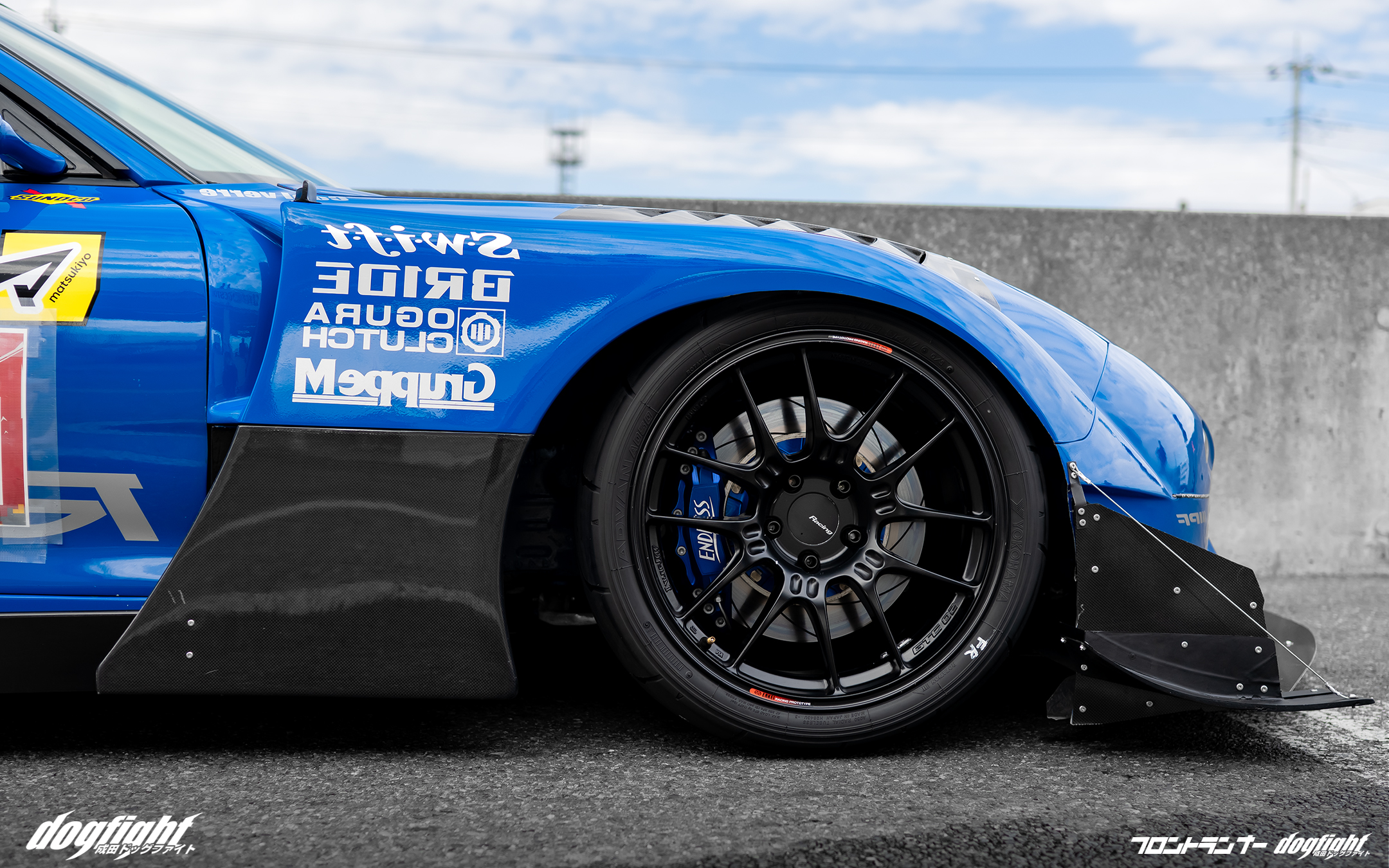
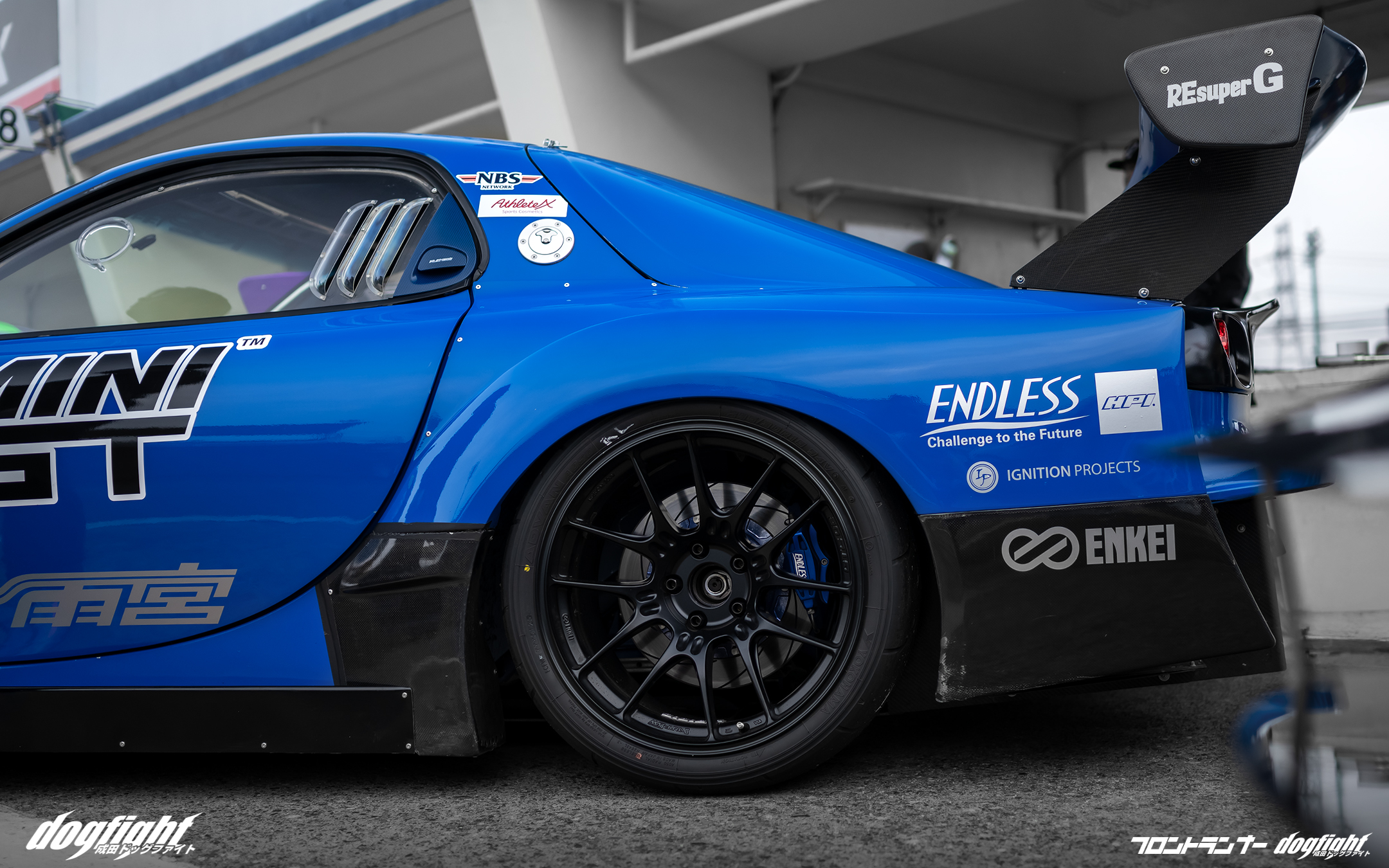
The suspension remained the same for this season, with Zeal Function damper units by Endless reworked to RE Amemiya spec. The dampers are running 22kg/mm springs front and rear. In the test prior to Attack, based on Sakaguchi’s feedback, the team softened the front damper and removed the strut tower bar entirely. Front traction improved and the time went down. It was a counterintuitive call at the time, and a difference in setup from Ikeda’s prior driving, but the data backed up the decision with positive results. Just goes to show that sometimes a fresh outlook or someone with a varying driving style can be beneficial in racing. The front brakes are an Endless S4F 4-piston unit, and the rear a 2-piston S2 – a lightweight alternative to the OEM units and one that strikes a perfect balance for the FD.
The team rotates through a couple different sets of 18×10.5j Enkei GTC02 wheels, wrapped in the usual Advan A050 295/30/18 in GS compound. The car sits at 1050kg with the interior fully stripped and the fuel tank relocated to the right rear for weight distribution. The transmission is a Hewland 6-speed sequential, unchanged from last season.
The body runs the RE Amemiya D1 wide body kit as its base, with a few select modifications – like the enclosed front bumper vents. The 2026 spec sees slightly lower wing stays, added front canards, front fender diffuser, and an updated color alongside the ECU revisions. Otherwise the car is mechanically unchanged from last season. It lost a little heritage this year, dropping the famous RE pink accents, but the all blue design stands out in its own way.

The 54.329 was set in pre-event practice, in what the team considers a provisional setup, on 295 series Advan A050 GS compound. With the results other drivers have been achieving with the new A1 compound, now available from Yokohama, it isn’t a stretch to say that the NA7 is capable of a 53 second lap time at TC2000. With Sakaguchi having only one test session in the car before Friday, and on a set of used GS, there’s certainly more in the setup (and tires) and as he continues to build familiarity with the car I’m confident that will show up in the times. Sakaguchi was actually sent out one session during Attack on the A1 compound, however, because the A1 is such a knife-edge compound, the times did not improve. It will require a different setup and some time for Sakaguchi to become accustom with the new grip limits. A1 does have higher peak grip, getting there is a bit of a challenge though.
I’ve been following the NA7 since it first appeared at Tsukuba and have had the chance to spend time around it and the people behind it across multiple seasons. Watching it take the NA class record, with a new driver who had barely sat in it, is a pretty good indicator of where this car is headed as the season develops. The 53-second barrier in the NA class is a realistic conversation now, and the NA7 is the most likely candidate to start it. Once again the NA Class proves it is among the most highly contested and exciting in Japanese time attack.

RE Amemiya — Tomisato, Chiba / re-amemiya.co.jp